Culture / Fashion
Dressed Like an Emperor.
Behaving Like a God.
Mike Tyson, Gianni Versace and humanity's magnificent obsession with looking powerful.
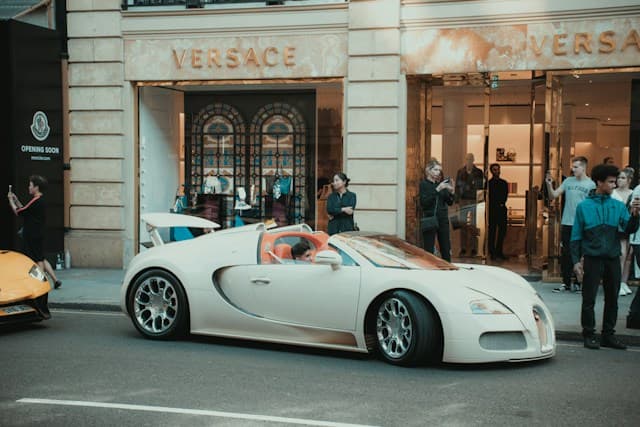
The Roman emperors had marble statues, golden wreaths and entire armies. Mike Tyson had a heavyweight title, a terrifying right hand and, apparently, Versace underwear.
Two thousand years apart, the principle remains remarkably familiar: power is rarely content simply to exist. It also wants to be seen.
And if it can be seen from the other side of the room, preferably in gold, so much the better.
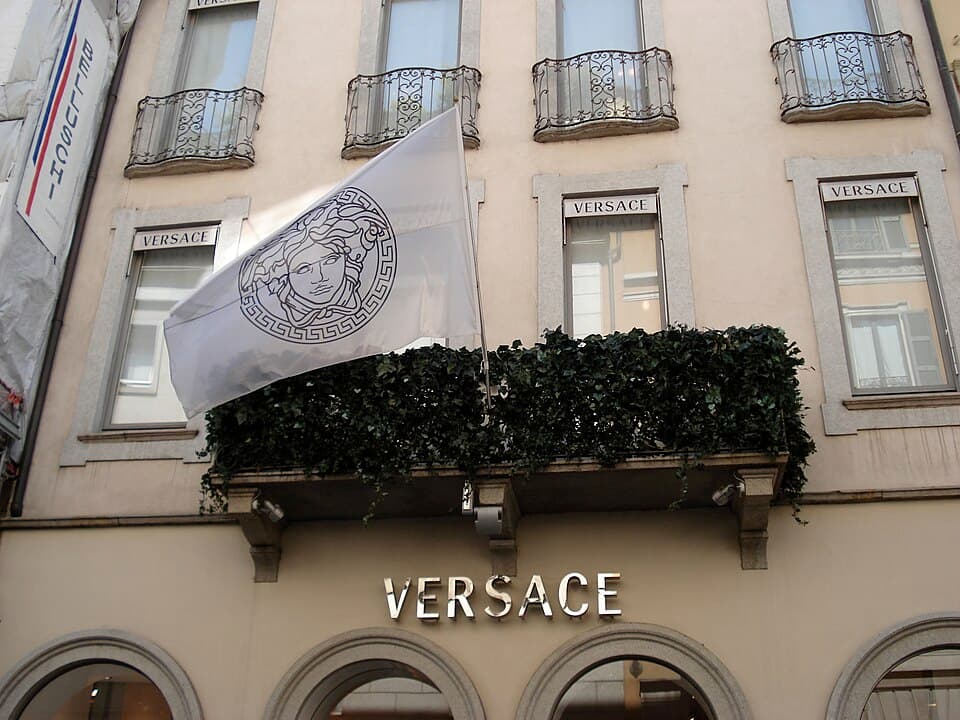
The Man Who Dressed Like a Palace
Gianni Versace did not believe in whispering.
Where other designers pursued restraint, he embraced colour, sensuality, theatricality and the sort of gold detailing that might have made a Roman emperor feel slightly underdressed.
His clothes were not designed to disappear into polite society. They were designed to enter a room before their owners did.
Baroque patterns, classical motifs, daring cuts, silk shirts and unapologetic ornamentation became part of a visual language that was unmistakably his.
It was luxury without the usual apology.
There is something wonderfully defiant about that. For all the admiration we give to understated elegance, fashion would be a considerably duller place if everybody dressed as though they were attending a discreet meeting with their accountant.
Versace understood something essential about human nature: sometimes we do not want our clothes to suggest who we are.
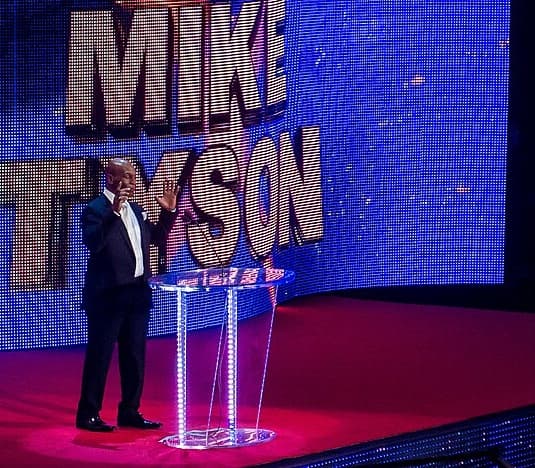
Enter Mike Tyson
Few people embodied the contradictions of extravagant power quite like Mike Tyson.
In the boxing ring, his presence was almost frighteningly economical. No unnecessary decoration. No elaborate introduction required. Just a compact figure moving forward with the unmistakable promise of violence.
Outside the ring, however, economy was apparently less of a priority.
There were extravagant houses, expensive cars, spectacular shopping habits and, most famously, pet tigers.
Actual tigers.
Not a decorative motif embroidered on a cushion. Not a bronze sculpture standing beside a swimming pool. Living, breathing Bengal tigers.
At a certain level of wealth, apparently, a sports car is no longer sufficient. One begins to wonder whether it might look better with a large predator in the passenger seat.
Tyson later acknowledged that keeping such animals was a mistake. The spectacle was real, but so were the dangers.
His relationship with fashion was equally fascinating, though rather less hazardous to the general public.
In interviews, Tyson has recalled meeting Gianni Versace through Naomi Campbell and described how the designer made suits especially for him. He bought more from the boutiques anyway.
Even his underwear, he recalled, was Versace.
This is an extraordinary detail.
A man capable of terrifying the world's best heavyweight boxers still wanted the reassurance of an Italian fashion house beneath his boxing shorts.
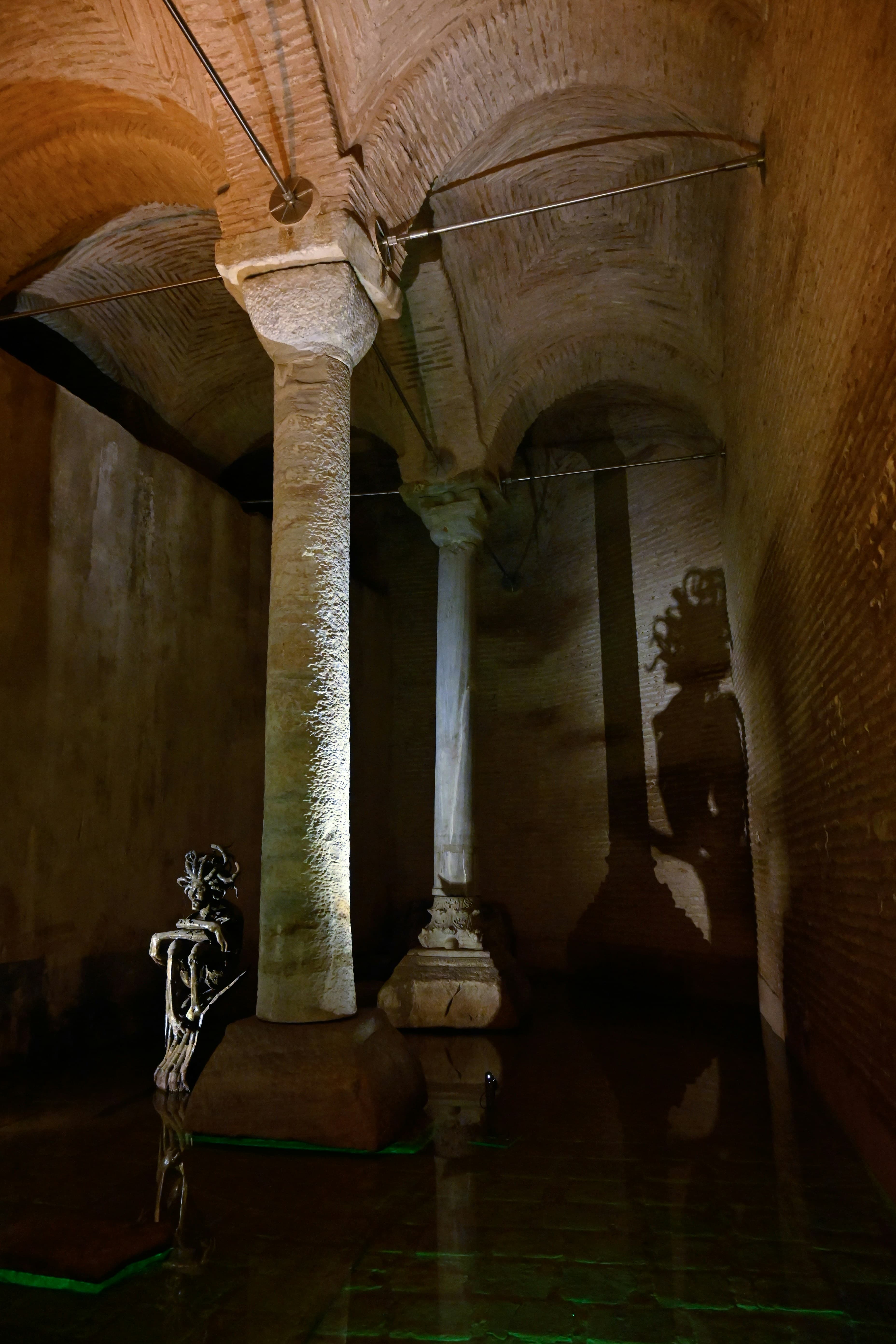
A Medusa Is Never Just a Logo
The symbol at the heart of Versace's universe is Medusa, the snake-haired figure from Greek mythology.
In the most familiar version of her story, looking directly at Medusa could turn a person to stone.
It is an unusual choice for a luxury fashion house. Most brands would presumably prefer their customers to remain mobile.
But Gianni Versace understood the deeper attraction.
Medusa was not merely monstrous. Across centuries of art and interpretation, she became a complicated symbol of beauty, danger, fascination and irresistible power.
Versace grew up in Reggio Calabria, a part of southern Italy deeply shaped by the ancient Greek world. Classical imagery was not simply something he discovered in a museum as an adult. It belonged to the cultural landscape of his childhood.
His designs drew freely from that inheritance.
Greek ornament, Roman grandeur, Renaissance sensuality and Baroque extravagance were invited into the same room, where they appear to have got along splendidly.
And the Medusa became the perfect emblem.
The Emperor's New Wardrobe
We tend to imagine Roman emperors surrounded by gold, marble, silk and extravagance.
The reality was more varied.
Some rulers cultivated austerity and military discipline. Others became notorious for theatrical displays of wealth and personal magnificence.
What mattered was not simply the cost of an object, but what it communicated.
Purple dye, elaborate ceremonies, monumental buildings and carefully staged appearances helped distinguish imperial authority from ordinary life.
Power needed a visual language.
And this is where the distance between ancient Rome and modern celebrity begins to narrow.
A Roman ruler might commission an enormous statue.
A modern celebrity commissions a mansion.
One appears before the public in ceremonial dress.
The other steps out in a silk shirt that could comfortably double as a palace curtain.
Different centuries. Similar instincts.
Of course, the comparison has its limits. A heavyweight champion is not an emperor, and a fashion designer is not a political sovereign.
But all three inhabit worlds in which image becomes part of authority.
The audience must believe.
And belief, as history repeatedly demonstrates, is surprisingly responsive to a little gold.
The Godfather Would Disapprove
Consider another famous image of power: Don Vito Corleone.
In The Godfather, authority rarely needs to announce itself through spectacle. It sits quietly in a dark room, speaks softly and lets everybody else do the worrying.
The contrast is irresistible.
Versace's world is sunlight, silk, ornament and exposed confidence.
The Godfather's world is shadow, restraint, ritual and carefully controlled silence.
One says, Look at me.
The other suggests, You already know who I am.
Neither approach is inherently more authentic.
Both are performances, shaped by the expectations of the people watching.
And that may be the most interesting part.
Even the man who appears indifferent to appearances has chosen an appearance that communicates indifference.
Understatement, too, can be a costume.
It is simply a quieter one.
When Enough Is Not Enough
There is a point at which extravagant luxury stops being about practical enjoyment.
Nobody needs a gold-plated interior to get from one room to another. Nobody needs fifteen bespoke suits to demonstrate that they own a perfectly serviceable body.
And nobody needs a tiger to improve the handling of a Ferrari.
But necessity has never been the most interesting explanation for human behaviour.
We collect symbols.
We surround ourselves with objects that tell stories about success, belonging, ambition, rebellion or the person we once dreamed of becoming.
Sometimes those stories are beautiful.
Sometimes they are ridiculous.
Frequently, they are both.
Tyson's life also reveals the less glamorous side of extravagance. Immense earnings did not protect him from financial collapse, and spectacular possessions did not guarantee stability.
The objects that announce power cannot necessarily preserve it.
This is where Versace's genius deserves a distinction from mere excess.
His work was not simply expensive decoration. At its best, it transformed historical references, craftsmanship, colour and provocation into an instantly recognisable aesthetic.
Extravagance can be empty.
It can also be art.
The difference lies in whether something meaningful exists beneath the spectacle.
Long Live the Spectacle
It would be easy to dismiss the whole business as vulgar.
The gold. The silk. The tigers. The enormous houses. The apparently urgent requirement that even one's underwear possess a distinguished Italian pedigree.
But there is something deeply human about it all.
For thousands of years, we have dressed our heroes, rulers, gods and ourselves in symbols of importance.
We have built palaces, commissioned portraits, invented crowns and spent astonishing amounts of money persuading the world that we are somebody worth noticing.
Sometimes we choose quiet elegance.
Sometimes we choose Versace.
And occasionally, against all reasonable advice, we choose a tiger.
The fascinating question is not why human beings are attracted to extravagance.
It is why, after several thousand years of practice, we are still so wonderfully bad at knowing when to stop.
Perhaps that is what makes luxury interesting in the first place.
Not the price tag.
Not the gold.