The VILCERIQUE Journal / Essay No. 004
When Did We
Stop Keeping Things?
On disposable possessions, restless desires, and the quiet art of being satisfied.
October 26, 2026·An Essay on Culture & Heritage
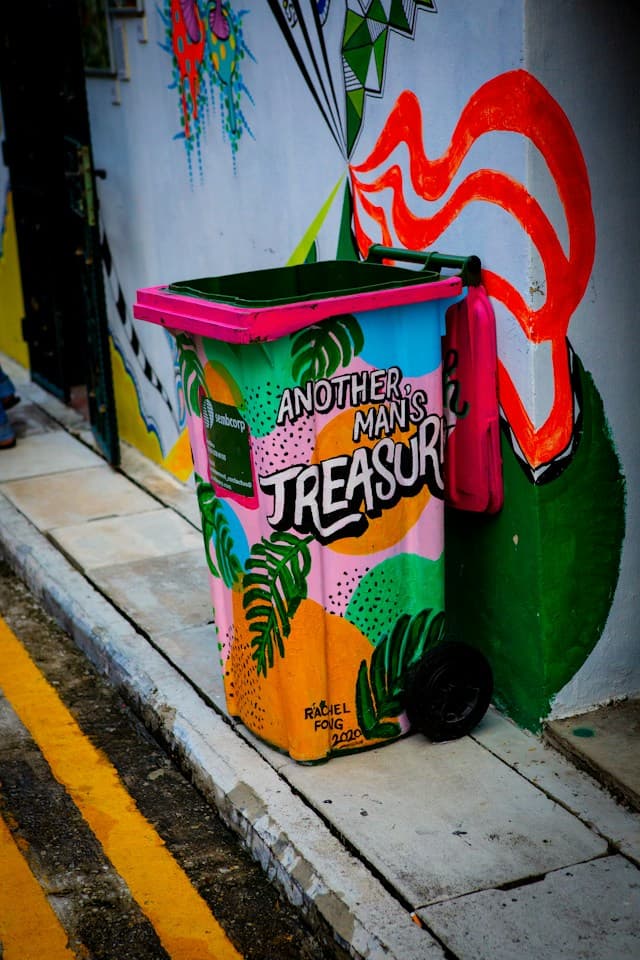
There was a time when a broken radio was not necessarily a reason to buy a new radio.
It was a reason to find a screwdriver.
A coat might be worn for twenty winters. A dining table would survive several generations of family dinners. Shoes were taken to the cobbler, watches to the watchmaker, and furniture was repaired rather than replaced.
Not because everyone was particularly virtuous. Often, there simply wasn't enough money to do otherwise.
Today, a perfectly functioning telephone can feel old after two years. A jacket can become unfashionable before it has been washed twice. Furniture arrives in flat boxes and sometimes leaves in pieces.
We have become extraordinarily good at acquiring things.
But have we become any better at enjoying them?
The Generation That Repaired Everything
Ask someone who grew up in the middle of the twentieth century about their possessions, and you may hear stories that sound almost improbable today.
A washing machine that lasted twenty-five years. A family car maintained with an almost personal sense of responsibility. A grandfather's watch, still ticking long after its original owner was gone.
These objects were not necessarily luxurious. Their value came partly from their usefulness, partly from the effort required to acquire them, and partly from the years spent together.
But we should be careful about romanticising the past.
People repaired things because replacements were expensive, choices were limited, and household budgets were often tight. Many products were also simpler to service. A television repairman was a familiar occupation because televisions regularly needed repairing.
The old world was not an environmental paradise. Nor were previous generations immune to status, fashion or extravagance.
What has changed is something more fundamental.
Replacement has become easier than maintenance. And wanting something new has become a normal part of everyday life.
The Remarkable Business of Making Yesterday Feel Old
Imagine running a company that manufactures an excellent jacket.
It is beautifully made, timeless in design and durable enough to last thirty years.
You sell one.
And then, perhaps, your customer doesn't need another for thirty years.
From the customer's perspective, this is wonderful.
From the perspective of a business dependent on constantly increasing sales, it presents an interesting problem.
Modern consumer industries have developed sophisticated ways of keeping desire alive. New collections, limited editions, product launches, influencer partnerships, seasonal colours and carefully manufactured excitement.
The message is rarely that your current possessions have stopped working.
It is that something better has arrived.
This distinction matters.
There is nothing inherently wrong with innovation, fashion or commercial ambition. Better products can improve lives. Competition can make extraordinary things accessible to ordinary people.
But an economic system that rewards ever-increasing consumption creates an uncomfortable tension between what is profitable for businesses and what is genuinely beneficial for their customers.
A satisfied customer may be a loyal customer.
An endlessly dissatisfied customer may be an even more profitable one.
And somewhere along the way, dissatisfaction became something that could be cultivated.
The Pleasure That Disappears
Consider the last object you desperately wanted.
Perhaps it was a watch. A handbag. A new phone. A car.
For weeks, you imagined owning it. You compared prices, examined photographs and pictured the moment it would finally become yours.
Then it arrived.
For a while, it was magnificent.
But gradually, something happened.
The extraordinary became ordinary.
The new watch became the watch you wore. The beautiful car became the car that needed washing. The phone that once seemed impossibly advanced became the device you used to check the weather.
Psychologists describe a related phenomenon as hedonic adaptation: our tendency to become accustomed to improvements in our circumstances.
This does not mean material possessions cannot make us happy. They certainly can. A comfortable home, a useful tool or an object of exceptional beauty can provide genuine and lasting pleasure.
But the thrill of acquisition is not the same as the pleasure of ownership.
And when we confuse the two, we can find ourselves chasing the next purchase before we have learned to appreciate the last.
The problem is not that we love beautiful things.
It is that we sometimes expect them to solve problems they were never designed to solve.
What Happens When Everything Is Replaceable?
There is a more unsettling question.
What happens when the habit of replacement extends beyond our possessions?
We live in a world of extraordinary choice. We can replace a sofa with a few clicks, change our entertainment in seconds and encounter thousands of potential romantic partners through a screen.
Choice can be liberating. Nobody should remain in an unhappy relationship merely because earlier generations considered separation unacceptable.
Yet endless alternatives may also change our expectations.
A difficult conversation can begin to feel less appealing when another connection appears to be waiting. A relationship that has lost its initial excitement may be compared with the imagined perfection of someone we have never met.
But people are not products.
They cannot be upgraded without consequence. They become more complicated as we get to know them, not less. They disappoint us, challenge us and sometimes require patience when patience feels deeply inconvenient.
So do we.
It would be simplistic to claim that disposable fashion causes disposable relationships. Human intimacy is far more complicated than consumer behaviour, and there is no straightforward evidence for such a sweeping conclusion.
Still, the cultural parallel is worth considering.
If novelty becomes our measure of value, we risk overlooking the beauty that only familiarity can create.
The most meaningful relationships are rarely those in which nothing has ever gone wrong.
They are often those in which two people have decided that something is worth repairing.
The Environmental Bill
Of course, the consequences of disposable consumption extend far beyond our personal lives.
Every new object requires something from the world.
Raw materials must be extracted. Energy must be consumed. Goods must be manufactured, packaged, transported and eventually disposed of.
Some products can be recycled. Others are repaired, resold or passed on. Many become waste.
The environmental problem is not simply that people buy inexpensive things. A cheap jacket worn for fifteen years may be a better use of resources than an expensive jacket worn twice.
Nor is a luxury label proof of sustainability.
A beautifully marketed object can still carry a substantial environmental footprint.
The more useful question is often how much value and use we obtain from the resources consumed in making something.
A chair that lasts fifty years does not automatically have a smaller footprint than every alternative. Materials, production methods and actual use all matter.
But extending the useful life of products can reduce the need to manufacture replacements.
Perhaps the most radical environmental gesture is sometimes also the least glamorous.
Not buying anything at all.
The Industry That Could Choose Differently
There is an irony at the heart of modern luxury.
The industry frequently celebrates heritage, craftsmanship and timelessness.
It tells stories about objects made to endure.
Yet luxury businesses also participate in a commercial culture built around new collections, changing tastes and perpetual desire.
This contradiction does not make every luxury house hypocritical. Many produce remarkable objects, preserve specialist skills and offer repair services that help products remain useful for decades.
But craftsmanship and marketing do not always pull in the same direction.
The same company can celebrate a century-old design while encouraging customers to desire this season's variation.
The challenge for industry is not simply to make better products.
It is to develop business models in which keeping, repairing and caring for those products can be economically worthwhile.
Repair services. Replacement parts. Resale programmes. Honest information about durability. Designs that can be maintained rather than discarded.
None of these ideas requires us to abandon beauty, innovation or commercial success.
They simply ask whether growth must always depend on persuading people that what they already own is no longer enough.
What Actually Makes Us Happy?
Here is where the conversation becomes particularly interesting.
If buying more things reliably produced lasting happiness, the solution would be wonderfully simple.
We would only need to keep shopping.
Yet research into wellbeing repeatedly points toward something less convenient for advertisers.
Human relationships matter enormously.
The World Happiness Report 2025 examines the importance of social connection, kindness and shared experiences. Its findings reinforce the association between supportive relationships and life satisfaction.
This does not mean money is irrelevant. Financial security, safe housing and the ability to meet our needs are fundamental to a good life.
Nor does it mean that beautiful objects are meaningless.
But there is a difference between having enough and never feeling that we have enough.
A new purchase may give us excitement.
A close friendship may give us belonging.
A beautiful object may offer pleasure.
A person who knows us well may offer something harder to replace: the feeling of being understood.
Perhaps happiness is not about eliminating desire.
Perhaps it is about learning which desires deserve our attention.
The Beauty of Keeping
Imagine a jacket hanging in a wardrobe.
It is not new. Its cuffs have softened, the fabric has developed character, and a small repair near the pocket is almost invisible.
You remember where you bought it.
You remember wearing it on a particular journey. Perhaps someone you loved once borrowed it. Perhaps you wore it during an important moment in your life.
To a stranger, it is an old jacket.
To you, it is something else.
Its value has grown even as its resale price has fallen.
This is one of the quiet miracles of ownership: some things become more meaningful precisely because we have stopped replacing them.
The same can be true of a watch, a home, a friendship or a family tradition.
Their beauty is not necessarily obvious at first.
It accumulates.
And perhaps this is what our culture of constant novelty sometimes struggles to understand.
Not everything improves by becoming new.
Some things improve by becoming ours.
The VILCERIQUE Point of View
The next beautiful thing may already be in your possession. Perhaps it simply needs more time.
Sources & Further Reading
This essay combines cultural commentary with research on wellbeing, resource consumption and the environmental impact of consumer goods.
- World Happiness Report 2025 ↗
Research and analysis on social connection, caring, sharing and wellbeing.
- United Nations Environment Programme ↗
Global Resources Outlook 2024 — resource use and environmental impacts.
- European Environment Agency ↗
Research and information on textiles, circularity and environmental impacts.