Fashion / No. 029
The Case for Understated Menswear
What a Danish wardrobe staple can teach us about dressing well without dressing loudly.
A man can spend a remarkable amount of money trying to look as though he has not thought about his clothes. The achievement, when it works, is called effortless style. The effort, naturally, is rarely mentioned.
It is worth asking whether the same result might be achieved with rather less theatre. Not every good jacket needs an Italian surname. Not every convincing pair of trousers needs to announce a designer's philosophy. Sometimes the most interesting clothes are those that leave enough room for the person wearing them.
That is a useful place to begin with Matinique, a Danish menswear name associated with a contemporary, relatively accessible interpretation of smart casual dressing. It inhabits a category that luxury magazines sometimes neglect: clothes intended to be worn on an ordinary Tuesday.
The quiet ambition of ordinary clothes
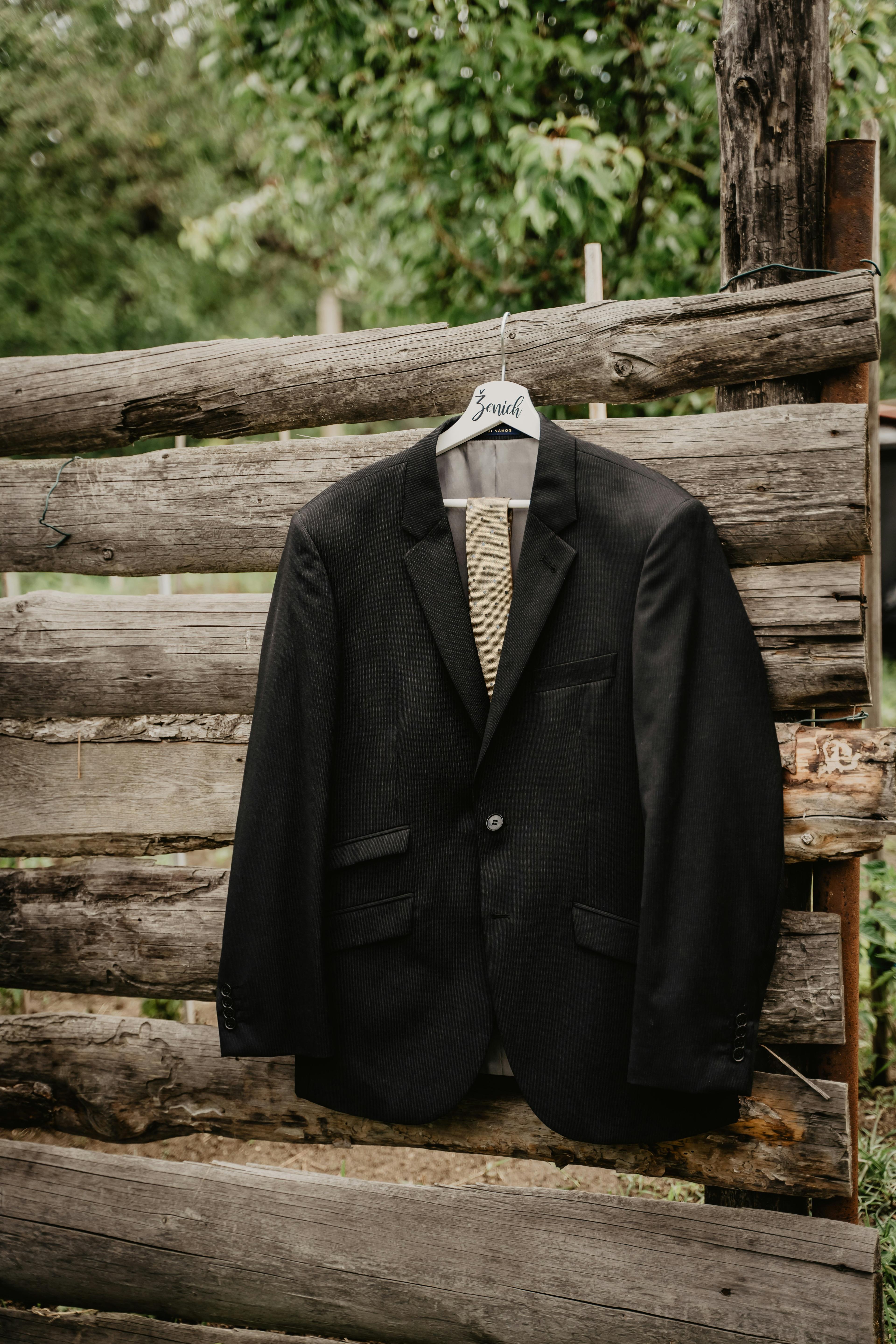
A simple dark jacket: illustrative wardrobe photography, not a Matinique product or a tested garment.
Photography: Victoria Priessnitz · black suit jacket on white plastic clothes hanger · Unsplash License
Displayed full frame; resized and converted to WebP by the delivery pipeline, without retouching. Journal thumbnails may be cropped.
The history of modern menswear is partly the history of relaxation. Formal tailoring once provided a narrow vocabulary: suit, shirt, tie, polished shoes. The late twentieth century gradually expanded it. Knitwear became office wear. Trainers crossed thresholds previously reserved for leather soles. A blazer no longer required matching trousers.
This created freedom, but also a new problem. When the rules disappear, judgement matters more. The proportions of a jacket, the weight of a fabric and the way a collar sits suddenly become more visible. A casual wardrobe can look carefully considered or merely accidental.
Matinique belongs to this middle ground. Its appeal is not that it can reproduce the construction of a bespoke suit for a fraction of the price. It cannot, and no honest assessment should pretend otherwise. Its appeal is the possibility of building a coherent wardrobe without turning clothing into a financial project.
What are we paying for?
The price of a garment is never a simple measure of its quality. It includes fabric, manufacturing, distribution, retail margins, marketing and the less tangible cost of a name. A luxury label may genuinely invest in better cloth and more sophisticated construction. It may also charge handsomely for recognition.
A mid-market brand faces the opposite challenge: finding a persuasive balance between material, fit, finish and price. This is where the consumer should become curious rather than loyal.
Consider a blazer. Before reading the label, look at its shoulders. Does the jacket follow the body without pulling? Does the collar rest against the neck? Are the lapels balanced? Does the fabric recover after being gently creased? Is the lining neatly attached? These observations tell us more than an aspirational campaign photograph.
Then look at the composition label. Wool, cotton, linen and synthetic blends all have legitimate uses, but they behave differently. A polyester-rich fabric may be durable and easy to care for, yet feel less breathable. A high wool content sounds attractive, but does not guarantee that the cloth is well made. The right question is not whether a fibre is prestigious; it is whether the garment works.

Denim weave and pocket stitching: illustrative garment detail, not a Matinique product or evidence of a wear test.
Photography: Castorly Stock · Blue Denim Jeans In Close-up View · Pexels License
Displayed full frame; resized and converted to WebP by the delivery pipeline, without retouching. Journal thumbnails may be cropped.
The Danish advantage — and its limits
Scandinavian style is often described as minimal. The word is convenient, though not always helpful. A simple wardrobe is not automatically a good one. Restraint becomes interesting only when something remains: a thoughtful silhouette, an excellent colour, a fabric with character.
There is an attractive practicality in Danish menswear at its best. Clothes are expected to move between work, a restaurant and a weekend without a complete change of identity. Navy, charcoal, olive, brown and cream are not revolutionary colours. Their virtue is that they are easy to live with.
But practicality can become blandness. When every collection offers another safe overshirt, another slim trouser and another neutral knit, a wardrobe risks becoming an exercise in avoiding mistakes rather than expressing taste. The answer is not louder branding. It is stronger judgement about fit, texture and the occasional unexpected detail.
Buy fewer, choose better

Everyday clothing on a shop rail: illustrative photography, not a Matinique collection.
Photography: Derick McKinney · white crew-neck shirt on hanger · Unsplash License
Displayed full frame; resized and converted to WebP by the delivery pipeline, without retouching. Journal thumbnails may be cropped.
The most convincing argument for accessible premium menswear is not that it is cheap. It is that a well-chosen piece may be worn often enough to become genuinely valuable.
Imagine two jackets. One costs twice as much as the other. The expensive jacket is admired in the wardrobe and worn four times a year. The more modest jacket fits beautifully, works with almost everything and is worn weekly. Their price tags tell one story; their lives tell another.
Cost per wear is not a complete philosophy of beauty. Some objects deserve to exist simply because they delight us. Yet it is a useful corrective to the notion that luxury begins at a particular price.
The difficult part is refusing the compromise that looks reasonable in a changing room but disappointing at home. A jacket that is almost the right length is not a bargain. A shirt whose collar never sits properly will not become better because it was discounted. Value for money requires discrimination, not merely thrift.
A more adult definition of style
There is a particular confidence in a man whose clothes do not appear to be auditioning for attention. That confidence can be expensive, but it does not have to be.
Matinique is interesting because it operates in the space where most wardrobes are actually built. It offers the opportunity to judge clothes by the standard that matters: how they fit, age, feel and serve the person who wears them. Individual pieces will inevitably succeed more than others. A brand name is a starting point, never a verdict.
Perhaps the most luxurious thing a wardrobe can do is stop demanding our attention. A good coat is reached for without hesitation. A good pair of trousers disappears into a day. A good jacket makes us feel like ourselves, only slightly better dressed.
That is not the most spectacular ambition in fashion. It may be one of the most useful.