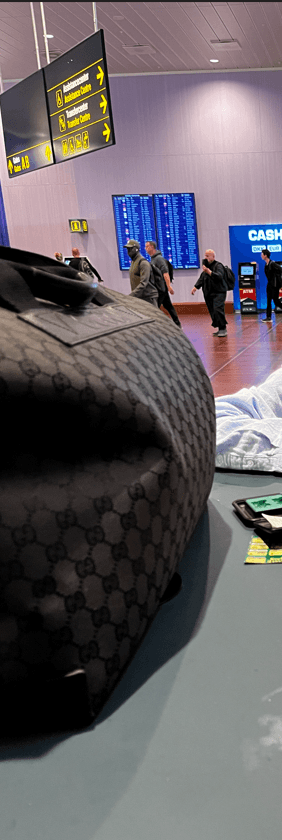
The Pleasure of Carrying Gucci
On a travel bag, a famous monogram, and the curious distance between wanting something and owning it.
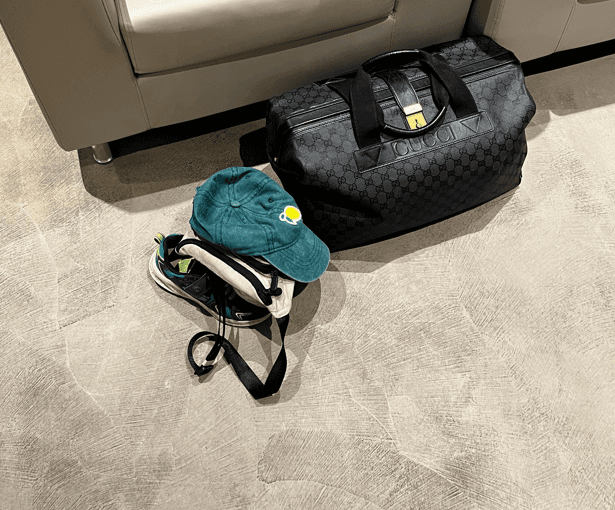
There is a particular kind of anticipation that belongs to a beautiful bag. It begins long before the bag is packed. Sometimes it begins long before the bag is even yours.
You imagine the familiar gestures: lifting it from a chair, setting it beside you at an airport, reaching for the handles as a journey begins. The object becomes part of a scene you have not yet lived. And somewhere along the way, it stops being merely a practical thing. It becomes a promise about how ordinary moments might feel.
That promise is worth examining. Especially when the bag carries one of the most recognizable names in fashion.
A Gucci travel bag is not necessary for travelling. An inexpensive holdall can carry the same clothes, toiletries and spare pair of shoes. It may be lighter. It may even be more practical. To understand the appeal of Gucci, then, we have to look beyond the question of what a bag can hold.
We have to ask what it means to carry one.
A name made for travel
Gucci's relationship with luggage is not a marketing invention added to the brand's history after the fact. Travel sits close to its origins. Guccio Gucci established his leather-goods business in Florence in 1921, and the house developed a reputation for luggage and accessories associated with a world of movement, hotels and well-dressed travellers.
It is an unusually fitting beginning. A travel bag is an object designed to accompany its owner between places, but it also exists in public. Unlike a wallet or a watch concealed beneath a cuff, luggage announces itself in hotel lobbies, train stations and airport queues. It is both equipment and presentation.
That dual purpose helps explain the lasting power of Gucci's visual language. The interlocking Gs, the familiar patterns, the recurring details: they are not merely decoration. They make an object identifiable from across a room. A Gucci bag does not always need a large printed name to be recognized.
Recognition is part of what the buyer pays for. Pretending otherwise would be a peculiar form of dishonesty.
Yet recognition is not the whole story. A bag can be recognizable and still be ugly. It can be expensive and still feel unpleasant in the hand. The most successful luxury accessories offer something beyond the logo: pleasing proportions, convincing materials, a silhouette that survives changing fashions, and a certain satisfaction in the act of using them.
The challenge is knowing how much of that satisfaction belongs to the object and how much we bring to it ourselves.
The black bag
The example at the centre of this story is a pre-owned Gucci travel bag in black GG nylon. Not a pristine showroom piece, and not an object acquired to sit untouched on a shelf. A bag chosen to be carried.
There is something appealing about this particular interpretation of Gucci. Black nylon is more restrained than some of the house's brighter, more theatrical expressions. The monogram remains present, but it tends to reveal itself through texture and light rather than through a loud contrast of colours. Depending on the angle, the pattern can appear almost discreet.
Almost is an important word. This is still Gucci. The point is not to disappear completely.
The material also complicates a familiar luxury assumption: that expensive must mean leather, and that leather must automatically be better. Nylon is not precious in the way fine leather can be. It does not acquire the same romantic patina, and the material alone cannot justify a luxury price. But a travel bag is meant to move. A textile construction can make sense when flexibility and weight matter, and it can create a different, more relaxed character than a rigid leather case.
Whether a particular bag is worth its price depends on the whole object: construction, stitching, hardware, handles, lining, condition and the experience of carrying it. A famous pattern cannot compensate for weak execution.
Nor should the word luxury exempt a product from ordinary scrutiny.
The pleasure of being seen
There is a small social theatre around recognizable luxury goods. We may insist that we buy them entirely for ourselves, and sometimes that is largely true. But the possibility of recognition is often part of the attraction.
A Gucci bag is legible to people who know fashion and to many who do not. It can communicate taste, spending power, interest in design or simply an affection for the brand. It may also communicate something its owner never intended: vanity, excess or an eagerness to impress.
The object cannot control its interpretation.
That is one reason I find the language of quiet luxury slightly inadequate. Quietness is not always a virtue, and visibility is not necessarily vulgar. There is room for pleasure in a recognizable monogram. Dressing well is not an exercise in proving that nobody noticed.
A travel bag, in particular, is allowed a little theatre. It accompanies departures, reunions, holidays and those brief moments when the everyday world opens into something else. If carrying a beautiful bag makes those moments more enjoyable, that pleasure is real even if it cannot be measured in durability tests or resale figures.
The question is whether we can enjoy being seen without allowing the desire to be seen to govern what we buy.
That distinction matters more than the logo itself.
Before and after the purchase
Luxury is especially good at occupying the imagination. The search, the comparison, the photographs, the waiting: all of it can be absorbing. Sometimes the object begins to feel like the missing piece in a life that is otherwise perfectly complete.
Then it arrives.
The bag is beautiful. You pick it up. You look at it from different angles. Perhaps you take it on a journey. And gradually, as with almost everything we own, the extraordinary becomes familiar.
This is not a failure of the product. It is part of being human.
We adapt to our possessions. What once seemed almost impossibly desirable becomes the bag by the door. That change can feel disappointing if we expected the purchase to produce a permanent thrill. But there is another possibility: the excitement of acquisition can give way to a quieter and more durable satisfaction.
The better question is not whether the bag continues to produce the sensation of opening a present. It is whether we still like reaching for it months later.
Does it suit the way we travel? Does it feel right with the clothes we actually wear? Does it make packing and leaving a little more pleasant? Do we admire it without needing to think about what it cost?
Those are more demanding tests than the moment of purchase.
And they are probably fairer ones.
Why buying pre-owned changes the equation
A pre-owned luxury bag introduces an interesting correction to the usual story. Instead of paying for the ceremony of buying something new, the buyer pays for an object that already exists, with whatever history and imperfections it carries.
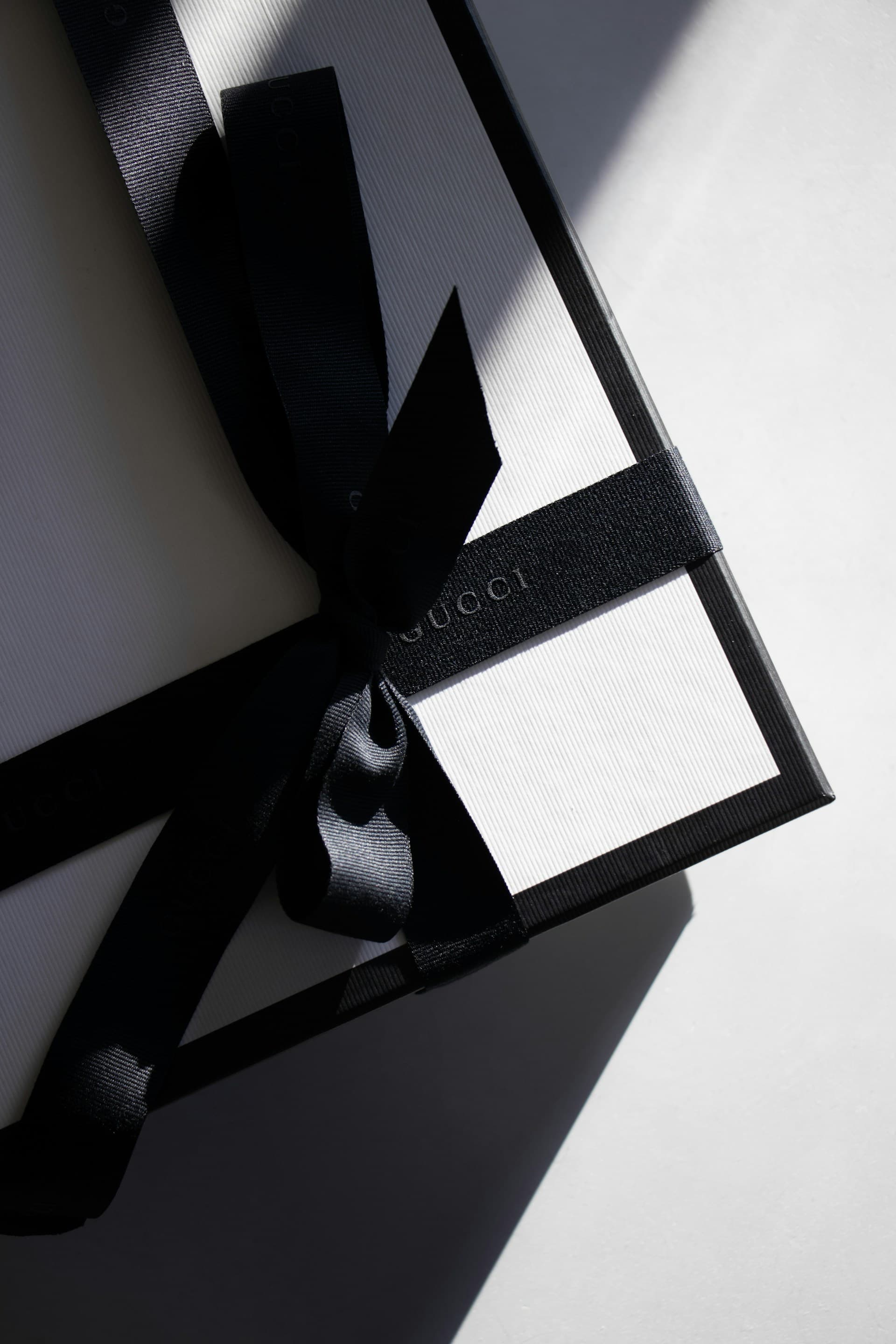
The distinction is not merely financial, although price matters. A second-hand purchase can shift attention away from the boutique experience and towards the bag itself. Does the design still appeal when it is no longer surrounded by polished counters and careful packaging? Does it retain its charm after someone else has carried it?
If the answer is yes, that says something meaningful about the design.
It also invites practical caution. Condition, authenticity, wear to handles and corners, the integrity of hardware, and the reliability of the seller all matter. A lower price is not a bargain if the bag is misrepresented or nearing the end of its useful life.
Nor is second-hand automatically sustainable in every circumstance. The most responsible purchase is not necessarily the one with the most reassuring label; it may simply be the object that is used, cared for and kept for years.
For a house whose identity is so closely tied to heritage, there is something rather appropriate about a bag having a life before its current owner.
What are we paying for?
This is the uncomfortable question at the centre of almost every luxury purchase.
Not just fabric. Not just zips, handles or stitching. And certainly not a guarantee that the product will outperform every less expensive alternative.
Part of the price buys design. Part buys brand history, distribution, presentation and the ability to recognize an object immediately. Part buys the assurance—or at least the expectation—that someone has paid attention to details. And part buys a story the owner is pleased to enter.
Some of those things are tangible. Others are emotional. Both can have value, but they should not be confused.
A Gucci travel bag does not become superior to an ordinary bag merely because it is Gucci. Equally, dismissing it as just nylon with a logo misses something about why people care for objects in the first place. We do not choose everything in life by dividing utility by price. If we did, much of fashion, design, art and hospitality would make very little sense.
The reasonable position lies somewhere between worship and contempt.
We can appreciate the house's visual identity while questioning the premium attached to it. We can enjoy the bag without claiming that it is indispensable. We can admit that being recognized is pleasant without pretending that recognition is the same thing as personal worth.
Perhaps the most sophisticated relationship with luxury is not to deny its seductions, but to understand them.
A bag worth carrying
I like the idea of luxury objects that participate in life rather than waiting to be admired. A travel bag should travel. It should be lifted, packed, unpacked and taken along. It should acquire memories more interesting than the receipt that came with it.
That is where a Gucci holdall has the chance to become more than a purchase. Not because its monogram has some magical power, but because it can accompany experiences that matter far more than the object itself.
The pleasure of carrying Gucci is partly aesthetic, partly social and partly private. It is the enjoyment of a familiar design, the confidence of something chosen deliberately, and the small ceremony of setting off with a bag you genuinely like.
None of that requires us to believe that Gucci is always the best choice, or that luxury is a substitute for a good life.
A beautiful bag cannot make a journey meaningful.
But it can be a lovely thing to take along.