The VILCERIQUE Journal / Portrait No. 015
The Man Who
Wore His Watch
Wrong
Gianni Agnelli ruled an industrial empire, broke the rules of elegance, and became the man everyone wanted to imitate.
By VILCERIQUE Editorial
October 26, 2026·Icons / Watches / Fashion / Culture
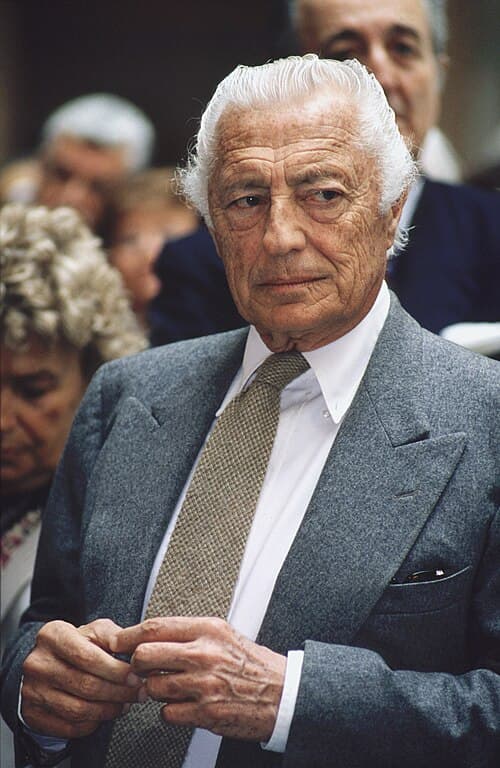
The Watch Outside the Shirt
There is something wonderfully strange about the way Gianni Agnelli wore a watch.
It was not hidden beneath the cuff of his shirt, as convention suggested.
It sat on top of it.
Visible. Unapologetic. Almost absurdly prominent.
On another man, the arrangement might have looked like a mistake. An absent-minded decision made while dressing in a hurry.
On Agnelli, it became a signature.
And eventually, an object of imitation.
The Italian industrialist was photographed wearing watches this way for decades. Sometimes the watch was elegant and restrained. Sometimes it was anything but.
A photograph from 1987, preserved in the historical archives of Audemars Piguet, shows him wearing an extraordinary timepiece: a 49-millimetre perpetual-calendar pocket watch converted for use on the wrist.
It was a remarkable choice for an era in which elegant wristwatches were generally much smaller.
And he wore it outside his shirt cuff.
It is a remarkable image, not simply because of the watch, but because of the man wearing it.
He looks entirely comfortable.
As though nobody had ever suggested there might be another way.
That was the peculiar genius of Gianni Agnelli.
He could do something visibly unconventional and somehow make everyone else appear slightly overdressed.
The Man Who Had Everything
Giovanni Agnelli was born in Turin in 1921, into the family that had helped create Fiat, the Italian automobile manufacturer founded by his grandfather.
His life unfolded at a remarkable intersection of industry, wealth, politics and culture.
He grew up with access to a world most people could scarcely imagine.
Cars.
Yachts.
European aristocracy.
International society.
And the immense expectations attached to one of Italy's most important industrial families.
He became known as L'Avvocato — the Lawyer — a nickname that followed him throughout his life.
In 1966, he became chairman of Fiat.
He would remain at the head of the company until 1996.
During those decades, Fiat was far more than a carmaker. Its factories, employees and industrial relationships were woven into the economic and political life of Italy.
Agnelli was therefore not merely the head of a successful business.
He was a national figure.
A man whose decisions could affect entire communities.
Whose opinions carried weight in the country's public life.
And whose personal image became almost inseparable from a particular vision of modern Italy.
Yet outside the boardroom, another Agnelli existed.
The yachtsman.
The skier.
The international socialite.
The man photographed with politicians, artists, designers and film stars.
He married Marella Caracciolo, herself a celebrated figure of elegance and society.
Together, they occupied a world of extraordinary privilege.
But privilege alone does not explain why Agnelli remains interesting.
History contains countless wealthy industrialists.
Very few are still studied for the way they wore their shirts.
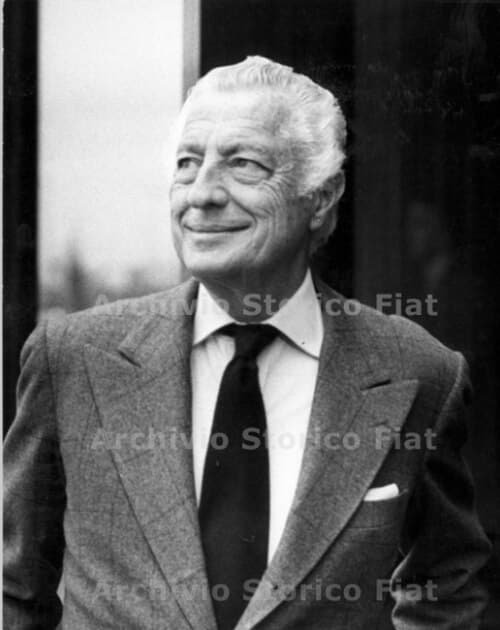
Elegance With Something Slightly Wrong
Agnelli understood beautiful clothes.
He wore exceptionally tailored suits.
He appreciated fine fabrics, good proportions and the traditions of European menswear.
He was associated with celebrated tailors and with a wardrobe that combined Italian refinement and American informality.
But there was almost always something unexpected.
The collar buttons of his button-down shirts might be left undone.
His tie could be uneven, with the narrow end hanging longer than the wide one.
He sometimes wore sturdy suede or hiking-style boots with formal tailoring.
And, of course, there was the watch.
Always the watch.
These details were not random eccentricities attached to an otherwise ordinary wardrobe.
Together, they created an unmistakable personal language.
Agnelli looked like a man who knew the rules perfectly well.
And had decided that some of them were optional.
Fashion writers often describe this quality using the Italian word sprezzatura.
A kind of studied nonchalance.
The appearance of effortlessness.
Elegance that does not seem to be trying too hard.
It is a difficult quality to achieve.
Because the moment effortlessness looks carefully rehearsed, much of its charm disappears.
Agnelli became one of its most frequently cited modern examples.
But perhaps there is a more interesting explanation for his style.
Perhaps some of those famous choices were never intended to be fashionable at all.
The Accident That Became an Aesthetic
Consider the boots.
With his tailored suits, Agnelli was sometimes photographed wearing footwear that appeared almost stubbornly inappropriate.
Heavy soles.
Soft suede.
A shape better suited to walking outdoors than sitting in a boardroom.
It became one of his most recognisable signatures.
But there was a practical dimension to the choice.
Agnelli had suffered a serious motoring accident in his youth, leaving lasting injuries to his leg.
Accounts of his wardrobe have connected his preference for supportive, comfortable footwear with those injuries.
What appeared to be an extraordinary act of stylistic independence may therefore have been, at least partly, a matter of physical necessity.
The same uncertainty surrounds the watch.
One explanation, attributed to his friend Taki Theodoracopulos, was that Agnelli's tightly fitted bespoke shirt cuffs did not comfortably accommodate a watch underneath.
Rather than change the watch or the shirt, he simply wore the watch outside.
Another frequently repeated explanation is that he wanted to see the time without having to pull back his sleeve.
Neither story should be treated as the definitive origin of the habit.
But perhaps the uncertainty makes the story better.
Because the question is no longer whether Agnelli was deliberately breaking the rules.
The question becomes whether he cared that he was breaking them.
He had a practical problem.
He found a solution.
And he continued wearing it.
What other people eventually called style may have begun as nothing more complicated than convenience.
The Watch Collection of a Man Who Needed No Approval
Agnelli's watches reflected the same independence as his clothes.
He was not devoted to a single brand or a single conventional idea of what a gentleman's watch should be.
He wore elegant Cartier pieces.
He wore unusual designs.
He wore watches that seemed almost impossibly large for the era.
And he wore pocket watches adapted for the wrist.
The most extraordinary documented example is the Audemars Piguet Model 25555.
A perpetual-calendar pocket watch, 49 millimetres in diameter, adapted to be worn on the wrist and photographed outside his cuff.
In the context of the 1980s, when many elegant wristwatches were considerably smaller, it was an astonishing choice.
Not merely unconventional.
Almost theatrical.
And yet, on Agnelli, it looked entirely at home.
There is an important distinction here.
Agnelli did not need his watch to establish his social position.
His identity was already known.
His wealth was already understood.
His influence required no introduction.
Perhaps that gave him a freedom that many collectors never experience.
He could choose something because he liked it.
Because it interested him.
Because it amused him.
Or simply because he found it useful.
The watch did not need to prove that he belonged.
He already belonged.
And that raises a rather uncomfortable question about luxury.
How often do we choose the things we genuinely love?
And how often do we choose the things that we hope will make other people admire us?
When Everyone Began Copying Him
There is a wonderful contradiction at the heart of Agnelli's reputation.
He became famous for doing things differently.
And then other people began doing those same things.
Valentino Garavani, one of the great names of Italian fashion, acknowledged that he had copied Agnelli's habit of wearing a watch outside the shirt cuff.
Think about that for a moment.
One of the world's most influential designers was taking style inspiration from an automobile executive.
Not from a runway.
Not from a fashion campaign.
From the way another man happened to wear his watch.
It is a remarkable illustration of how personal style acquires cultural authority.
An individual makes an unusual choice.
Others notice.
They admire it.
They imitate it.
Eventually, the unconventional choice becomes recognisable.
Then fashionable.
Then, perhaps, a convention of its own.
The original act of independence becomes something other people feel compelled to reproduce.
There is something almost comic about that.
A man wears his watch incorrectly.
The world decides he is elegant.
And soon, other men are carefully arranging their watches incorrectly too.
Perhaps while checking in a mirror to make sure they have achieved precisely the right degree of carelessness.
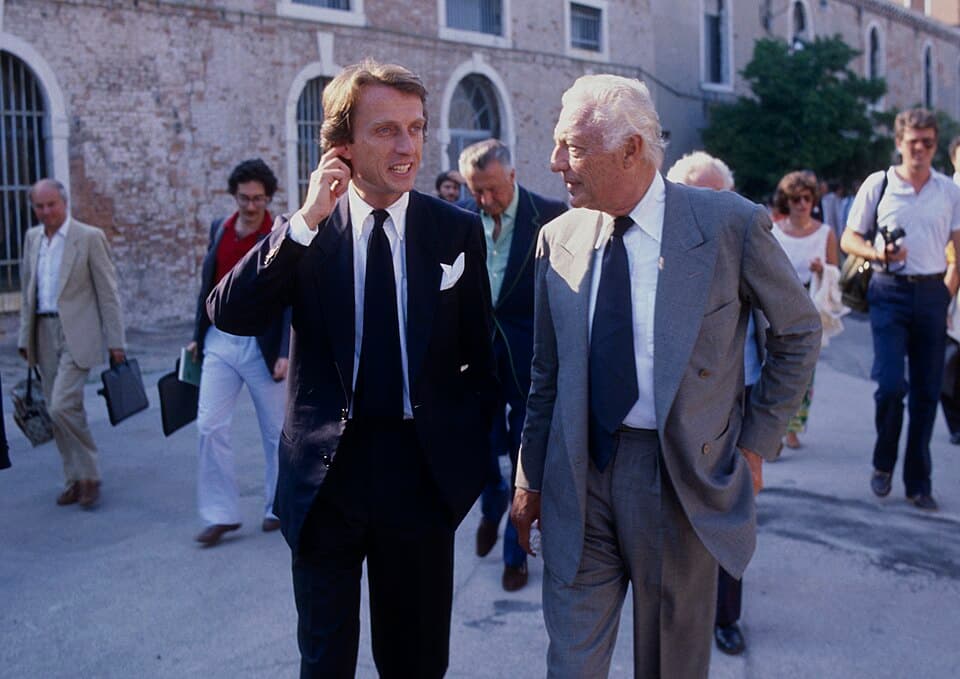
The Difference Between Having Style and Borrowing It
This is where Agnelli's story becomes more interesting than a collection of sartorial tricks.
Anyone can copy the watch.
Anyone can leave the collar buttons undone.
Anyone can tie a necktie unevenly.
Anyone can purchase expensive suede boots and wear them with a grey suit.
But none of these choices guarantees elegance.
Because Agnelli's style was not simply the sum of his clothes.
It was the relationship between the clothes and the man.
His habits.
His confidence.
His physical circumstances.
His position in society.
His personality.
His life.
Remove those elements, and the famous details become something different.
A costume.
A quotation.
An imitation of a man who was not trying to imitate anyone.
There is nothing wrong with finding inspiration in another person's style.
That is how culture works.
We learn by observing.
We discover what appeals to us.
We borrow ideas and adapt them.
But there is a difference between being inspired by someone's independence and copying every visible sign of it.
The first can help us develop our own taste.
The second can prevent us from ever discovering it.
Perhaps the best way to dress like Gianni Agnelli is not to wear a watch over your cuff.
Perhaps it is to stop worrying about whether Gianni Agnelli would approve of your watch.
The Price of Being an Icon
It would be easy to romanticise Agnelli completely.
To present him as a charming aristocrat whose only concerns were beautiful cars, elegant suits and afternoons on the Mediterranean.
But that would be a remarkably incomplete portrait.
Agnelli was a powerful industrialist operating in a complicated political and economic world.
Fiat's history involved industrial conflict, difficult business decisions and the lives of large numbers of workers.
His immense privilege separated him from the everyday experiences of most Italians.
His public image was shaped not only by personal charm but by extraordinary wealth and influence.
And his celebrated nonchalance was supported by a degree of security that few people will ever possess.
It is easier to ignore conventions when the consequences of doing so are small.
Easier to be eccentric when your position is secure.
Easier to appear indifferent to other people's approval when you are already one of the most recognised men in the room.
That does not make Agnelli's style less interesting.
But it makes the story more honest.
His elegance was real.
So was his privilege.
And the two cannot be entirely separated.
Perhaps this is part of what makes him such a fascinating figure.
He embodied both the possibilities and the contradictions of luxury.
Freedom and hierarchy.
Individuality and influence.
Personal taste and immense inherited advantage.
He was an icon.
But not a simple one.
The Man Who Became the Rule
Gianni Agnelli died in 2003.
More than two decades later, his image remains remarkably familiar to people interested in menswear and watches.
The silver hair.
The sharply cut suit.
The slightly unruly collar.
The unusual shoes.
And the watch sitting where a watch was supposedly not meant to sit.
There is something extraordinary about the survival of these details.
Fiat's business changed.
The world changed.
Men's fashion changed.
Watches grew larger, smaller and larger again.
New luxury brands rose to prominence.
New generations discovered their own ideas of elegance.
And yet the photographs of Agnelli continue to circulate.
Not because he wore the most expensive clothes.
Not because every choice he made was beautiful.
And certainly not because he followed the rules perfectly.
He remains interesting because his clothes seem to belong unmistakably to him.
That is a rarer quality than it sounds.
Luxury can provide extraordinary materials.
Craftsmanship can produce remarkable objects.
Money can purchase beautiful tailoring.
But none of these things can guarantee a recognisable personal style.
That must emerge from the person wearing them.
Agnelli understood, or at least demonstrated, something that modern luxury marketing often struggles to explain.
The most interesting thing about a beautiful object is not always the object itself.
Sometimes it is the person who chooses it.
The Watch Was Never the Point
There is a temptation, when looking at Gianni Agnelli, to focus on the details.
The watch.
The boots.
The tie.
The shirt.
To study them.
To reproduce them.
To search for the exact models.
To ask which brand made the shoes or which reference number appeared on his wrist.
There is pleasure in that kind of knowledge.
And there is nothing wrong with appreciating beautiful objects.
But perhaps the lesson of Agnelli's life is not hidden in a watch reference.
Perhaps it is hidden in the ease with which he wore it.
A man can own the finest watch in the world and spend his entire evening wondering whether other people have noticed.
Another can wear an old watch in an unconventional way and never think about it again.
Which of them is enjoying the greater luxury?
We often imagine that elegance requires perfect decisions.
The right suit.
The right watch.
The right shoes.
The right combination of colours.
The approval of people who understand these things.
But Agnelli suggests another possibility.
That elegance may sometimes come from the willingness to make a choice and live comfortably with it.
Even when someone else would have chosen differently.
Especially then.
The man who wore his watch wrong became one of the most admired style icons of the twentieth century.
Not because the rules were meaningless.
But because he understood, in his own extraordinary way, that they were never the whole story.
And perhaps the most elegant thing about Gianni Agnelli was not the watch outside his shirt.
It was the impression that he had never needed anyone's permission to put it there.
The VILCERIQUE Point of View
Gianni Agnelli did not become an icon because he wore his watch over his cuff.
He became an icon because the watch, the cuff, the suit and the man all seemed to belong together.
Luxury can buy beautiful things.
It cannot buy the confidence to make them your own.
Sources & Further Reading
This portrait combines documented biographical history, archival photographs and contemporary accounts of Agnelli's style with VILCERIQUE's independent editorial interpretation. Explanations for the origin of his over-the-cuff watch habit remain anecdotal rather than definitively established.
- The Avvocato Agnelli — Official Style Archive ↗
Historical photographs, including the famous watch worn outside the shirt cuff.
- Audemars Piguet — Historical Archives ↗
Historical research and archival documentation on calendar watches and unusual timepieces.
- Gentleman's Gazette — Gianni Agnelli: Gentleman of Style ↗
An examination of Agnelli's clothing, personal signatures and sprezzatura.
- VILCERIQUE — The Art of Looking Ordinary ↗
Our essay on understated luxury, discretion and the desire for recognition.
Photography & Image Credits
1986 portrait: Gorup de Besanez. Licensed under Creative Commons BY-SA 3.0. Wikimedia Commons original.
Azzurra, 1985: Gorup de Besanez. Licensed under Creative Commons BY-SA 4.0. Wikimedia Commons original.
1981 portrait: Fiat Historical Archive / Istituto Centrale per gli Archivi; photographer unknown. Marked as public domain on Wikimedia Commons. Consult the source page for applicable jurisdictional qualifications.
The original photographs are presented without editorial retouching. Any layout cropping of the photographs is indicated in the image presentation and should be assessed under the applicable ShareAlike terms.