The VILCERIQUE Journal / Essay No. 009
The Woman Who
Made Black Beautiful
How a colour once associated with mourning became a symbol of modern elegance — and why simplicity can be the most radical form of luxury.
By VILCERIQUE Editorial
October 26, 2026·Fashion / Icons / Culture
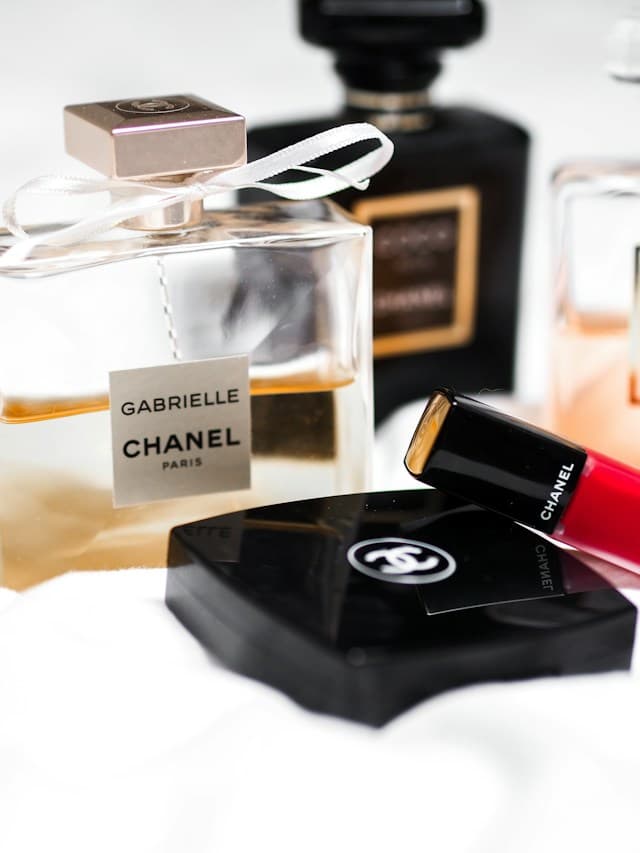
A Woman in Black
Imagine a fashionable evening in Paris, sometime in the 1920s.
The room is full of women dressed in silk, satin and elaborate decoration.
Jewellery catches the light.
Feathers rise above carefully arranged hair.
Fashion is not merely clothing. It is an elaborate performance of wealth, position and taste.
And then a woman enters wearing black.
Not the black of formal mourning.
Not the black of a servant's uniform.
But a simple, beautifully proportioned dress, worn as though it requires no explanation.
She does not appear to be missing anything.
She appears to have decided that nothing more is necessary.
In a room where everyone is trying to be noticed, she attracts attention by refusing to compete.
It is a seductive scene.
And although it is an imagined one, it captures something real about the transformation taking place in women's fashion during the early twentieth century.
The little black dress was becoming modern.
And one of its most influential advocates was Gabrielle Chanel.
Black Before Chanel
It would make a wonderful story to say that Chanel invented the little black dress.
But she did not.
Black clothing had existed for centuries, and its meanings had changed repeatedly.
It could signify mourning.
Religious devotion.
Authority.
Professional respectability.
Wealth.
Even extraordinary luxury.
In Renaissance Europe, achieving a deep, lasting black dye could be expensive. Black garments could communicate status rather than poverty.
By the nineteenth century, black was also firmly established in men's formal clothing.
And women had worn fashionable black dresses long before Chanel became famous.
The history is considerably richer than the familiar story of one designer rescuing a colour from obscurity.
What Chanel helped change was not the existence of black clothing.
It was the way a particular kind of black dress could be understood.
Simple.
Modern.
Versatile.
And entirely appropriate for a fashionable woman who had no intention of disappearing into the background.
In 1926, American Vogue published an illustration of a Chanel black dress that would become one of the most frequently cited moments in fashion history.
The magazine famously compared its potential universality to the Ford automobile.
The comparison was revealing.
The appeal was not extravagance.
It was the possibility of a dress that could transcend the endless demands of changing fashion.
A kind of uniform for modern elegance.
Of course, the garment itself was still part of the world of couture and fashionable consumption.
The simplicity was carefully designed.
And it was not necessarily inexpensive.
But it suggested something revolutionary.
A woman could look sophisticated without appearing heavily decorated.
The Luxury of Removing Something
Fashion often advances by adding.
Another detail.
Another embellishment.
Another layer.
Another reason for the customer to believe that last year's wardrobe is no longer sufficient.
But some of its most important developments have involved subtraction.
Remove the corset.
Reduce the ornament.
Simplify the silhouette.
Allow the body to move.
Let the material speak.
Chanel was not alone in these changes. Designers such as Paul Poiret and Madeleine Vionnet, along with broader social developments, contributed significantly to the transformation of women's dress.
The First World War had altered daily life.
Women were entering new forms of work.
Sport and leisure were changing expectations of movement and comfort.
The old vocabulary of dress was becoming less suited to the lives many women wanted to lead.
Chanel's genius was partly her ability to recognise these changes and give them a compelling visual identity.
She drew inspiration from garments and materials that fashionable society had not always considered luxurious.
Jersey.
Cardigans.
Practical tailoring.
Elements of men's clothing.
She demonstrated that elegance could emerge from proportion, confidence and ease rather than decoration alone.
But this was not a rejection of luxury.
It was a reinvention of it.
The expensive object no longer needed to announce its price through obvious complexity.
Its refinement could be quieter.
And, in some ways, more demanding.
Because when a garment has very little decoration, there is nowhere for poor design to hide.
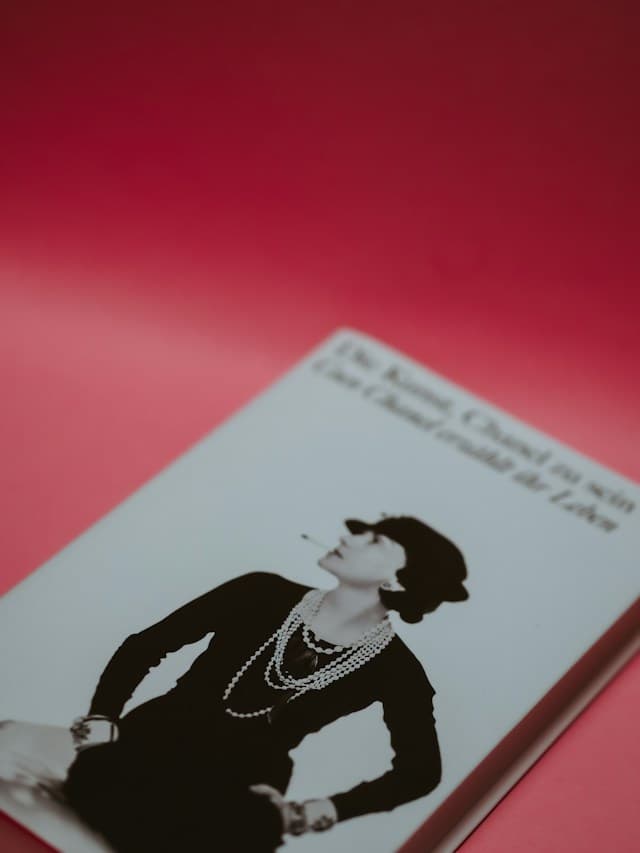
A Dress That Refused to Become Old
The little black dress possesses an unusual quality.
It can appear contemporary in photographs taken decades apart.
Its precise shape changes, of course.
Hemlines rise and fall.
Shoulders broaden and narrow.
Waists become defined, then disappear.
But the underlying idea remains remarkably resilient.
A relatively simple black dress can be adapted to different ages, occasions and personalities.
It is a canvas.
Jewellery can transform it.
Shoes can change its character.
A jacket can make it more formal.
A different hairstyle can move it from one decade to another.
The garment does not dictate an entire identity.
It allows the wearer to construct one.
Perhaps that is part of its enduring attraction.
Many fashionable objects are designed to be recognised immediately.
The little black dress can be powerful precisely because it does not demand recognition.
Its effect depends on the person wearing it.
That is a very different kind of luxury.
One based less on possession and more on interpretation.
When Hollywood Made It Immortal
If Chanel helped establish the little black dress as a modern fashion ideal, cinema helped transform it into a cultural symbol.
Consider Audrey Hepburn in the opening sequence of Breakfast at Tiffany's.
New York is quiet.
A taxi stops on Fifth Avenue.
Hepburn steps out in a long black dress, pearls and dark glasses, holding a paper bag containing her breakfast.
Behind her stands Tiffany & Co.
The scene has become one of the most recognisable images in fashion history.
The dress was designed by Hubert de Givenchy.
And that distinction matters.
The enduring power of the little black dress cannot be attributed to Chanel alone.
It became a shared language, interpreted by generations of designers, actors and women who made it their own.
Hepburn's appearance communicated something that transcended the garment.
Composure.
Mystery.
Independence.
A certain distance from the world around her.
The clothes did not create all of those qualities.
But they gave them a remarkably effective visual form.
A simple black dress had become capable of telling an entire story.
The Problem With Timelessness
There is, however, a contradiction in the fashion industry's enthusiasm for timeless pieces.
If a garment is genuinely timeless, why should its owner need another one next season?
The industry celebrates the enduring appeal of the little black dress while continually presenting new versions.
A different neckline.
A revised silhouette.
A new interpretation of an old idea.
Sometimes these changes are genuinely creative.
Fashion is an art form, and reinterpretation is part of its language.
But sometimes novelty serves a less romantic purpose.
It creates another reason to buy.
The little black dress sits at the centre of this tension.
It is both an argument for keeping clothes and an exceptionally successful commercial category.
Its cultural prestige makes it desirable.
Its supposed timelessness makes it reassuring.
And the industry's constant reinvention makes it perpetually available as something new.
Perhaps the most interesting question is not which version we should buy next.
It is whether we already own one that deserves to be worn again.
The Complicated Woman Behind the Myth
It would be easy to end the story here.
A visionary designer.
A simple black dress.
A revolution in elegance.
But fashion history becomes less interesting when its protagonists are treated as saints.
Chanel was an extraordinarily influential designer and businesswoman.
She was also a complicated historical figure.
Her life included relationships with powerful men, carefully constructed personal mythology and conduct during the German occupation of France that remains a serious part of her historical legacy.
Her documented association with a German officer and evidence concerning her wartime activities have prompted substantial historical scrutiny.
These facts should not be ignored simply because her designs were influential.
Nor does acknowledging them require pretending that her influence on fashion never existed.
The two truths can stand together.
A person can transform an industry and still deserve moral scrutiny.
An object can be beautiful without making its creator admirable in every respect.
And a fashion house can preserve a remarkable design heritage while carrying the burden of a difficult history.
That is not a contradiction to be resolved through marketing.
It is part of understanding the past honestly.
The woman who helped make black synonymous with modern elegance was neither the sole inventor of that idea nor the uncomplicated heroine of the story often told about her.
Her legacy is more interesting than that.
And less comfortable.
What Black Still Says
Walk into an elegant restaurant today.
Or a gallery opening.
Or a theatre.
Or an evening reception.
You will almost certainly see someone wearing black.
Perhaps several people.
Some will be dressed extravagantly.
Others with remarkable restraint.
Black can communicate severity.
Confidence.
Discretion.
Drama.
It can conceal.
It can reveal.
It can make jewellery more striking and tailoring more precise.
But its greatest strength may be that it does not insist on one meaning.
A black dress can belong to almost anyone.
The woman who wears it supplies the rest.
And that brings us back to the imagined Parisian evening.
The room full of elaborate gowns.
The woman who enters wearing something simpler.
She is not necessarily better dressed than everyone else.
That would be a matter of taste.
But she has made a decision.
She does not need to demonstrate elegance through excess.
She trusts that less can be enough.
And nearly a century after Chanel's famous 1926 dress appeared in Vogue, that idea remains surprisingly powerful.
Not because black is the most beautiful colour.
Not because simplicity is always superior to extravagance.
But because real elegance has never been exclusively about how much we wear.
Sometimes, it is about knowing what to leave out.
The VILCERIQUE Point of View
The little black dress did not become timeless because fashion stopped changing.
It became timeless because it gave women something that fashion so rarely offers: permission to stop adding.
Perhaps the most sophisticated thing we can wear is the confidence that nothing more is needed.
Sources & Further Reading
This essay combines historical material on Chanel, twentieth-century fashion and the little black dress with VILCERIQUE's independent editorial interpretation.
- The Metropolitan Museum of Art — The Costume Institute ↗
Historical collections and research on twentieth-century fashion and Gabrielle Chanel.
- Victoria and Albert Museum — Fashion ↗
Fashion history, twentieth-century design and the evolution of modern dress.
- Vogue — The Vogue Archive ↗
Historical context for the October 1926 illustration of Chanel's black dress.
- Palais Galliera — Musée de la Mode de Paris ↗
French fashion collections and historical perspectives on Chanel's work.
- Justine Picardie — Coco Chanel: The Legend and the Life ↗
A biographical study of Chanel and the mythology surrounding her life.
- Hal Vaughan — Sleeping with the Enemy ↗
Historical investigation into Chanel's wartime connections and activities.