Icons / No. 027
Enzo Ferrari: The Man Who Built a Myth
Ambition, obsession and the difficult personality behind one of the world's most powerful automotive symbols.
Before Ferrari became a global symbol of wealth, performance and Italian glamour, it was the ambition of one man whose relationship with automobiles was shaped by competition rather than luxury.
Enzo Ferrari did not begin with the idea of creating an international lifestyle brand.
He wanted to race.
Everything that followed — the road cars, the mythology, the extraordinary commercial value of the prancing horse — grew from that central obsession.
It is tempting to tell Ferrari's story as a triumph of vision and determination. But doing so without examining the man himself would miss what makes his legacy so compelling.
Enzo Ferrari was not simply an inspirational entrepreneur.
He was a difficult, demanding and sometimes contradictory figure whose achievements cannot be neatly separated from his character.
Before the Prancing Horse
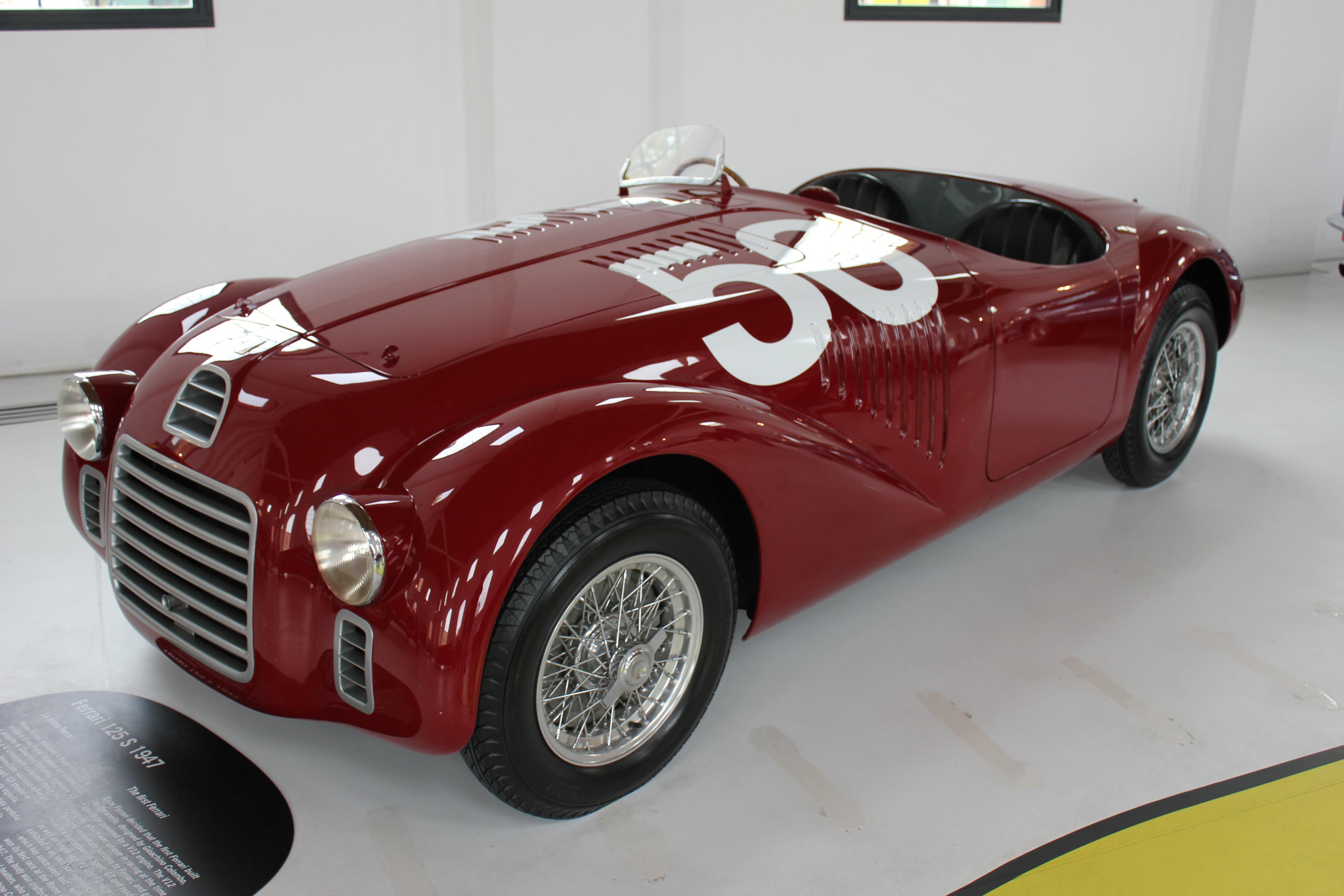
A Ferrari 125 S replica displayed at the Museo Enzo Ferrari, photographed in 2014. A modern museum photograph, not an image from 1947.
Photography: Christine und Hagen Graf / Wikimedia Commons · Ferrari 125 S - Museo Enzo Ferrari · CC BY 2.0

Resized and delivered in an optimized format; no crop or retouching in this article.
Born in Modena in 1898, Ferrari grew up during the early development of the automobile.
He pursued a career in motor racing and later became closely associated with Alfa Romeo, first as a driver and then through his racing organisation, Scuderia Ferrari.
Established in 1929, the Scuderia initially operated Alfa Romeo racing cars.
Ferrari's ambitions eventually brought him into conflict with the company, and their relationship ended before the Second World War.
The first car to carry the Ferrari name emerged in 1947.
What followed was the creation of one of the most recognisable identities in automotive history.
But unlike many luxury companies that begin with a consumer product, Ferrari's business was rooted in competition.
Road cars were essential to the company's financial survival and development, yet Enzo's deepest commitment remained racing.
The Power of Obsession
Ferrari understood the emotional power of motorsport.
A successful racing car was more than a technical achievement. It represented courage, danger, national pride and the possibility of human excellence.
The victories mattered because they gave the name meaning.
A Ferrari road car could therefore offer something beyond its engine, bodywork and interior. It connected its owner, however indirectly, to a world of racing ambition.
This became an extraordinarily effective form of brand building.
Ferrari did not need to invent an abstract mythology around an ordinary product. The drama of competition provided one.
But there was a darker side to the obsession.
Motorsport in Ferrari's era was extraordinarily dangerous. Drivers were regularly killed, and the pursuit of victory unfolded in circumstances that would be unacceptable by modern safety standards.
Ferrari's demanding management style and intense focus on results contributed to a reputation for emotional distance and uncompromising expectations.
The mythology of the determined founder can easily obscure the human cost of the world he helped create.
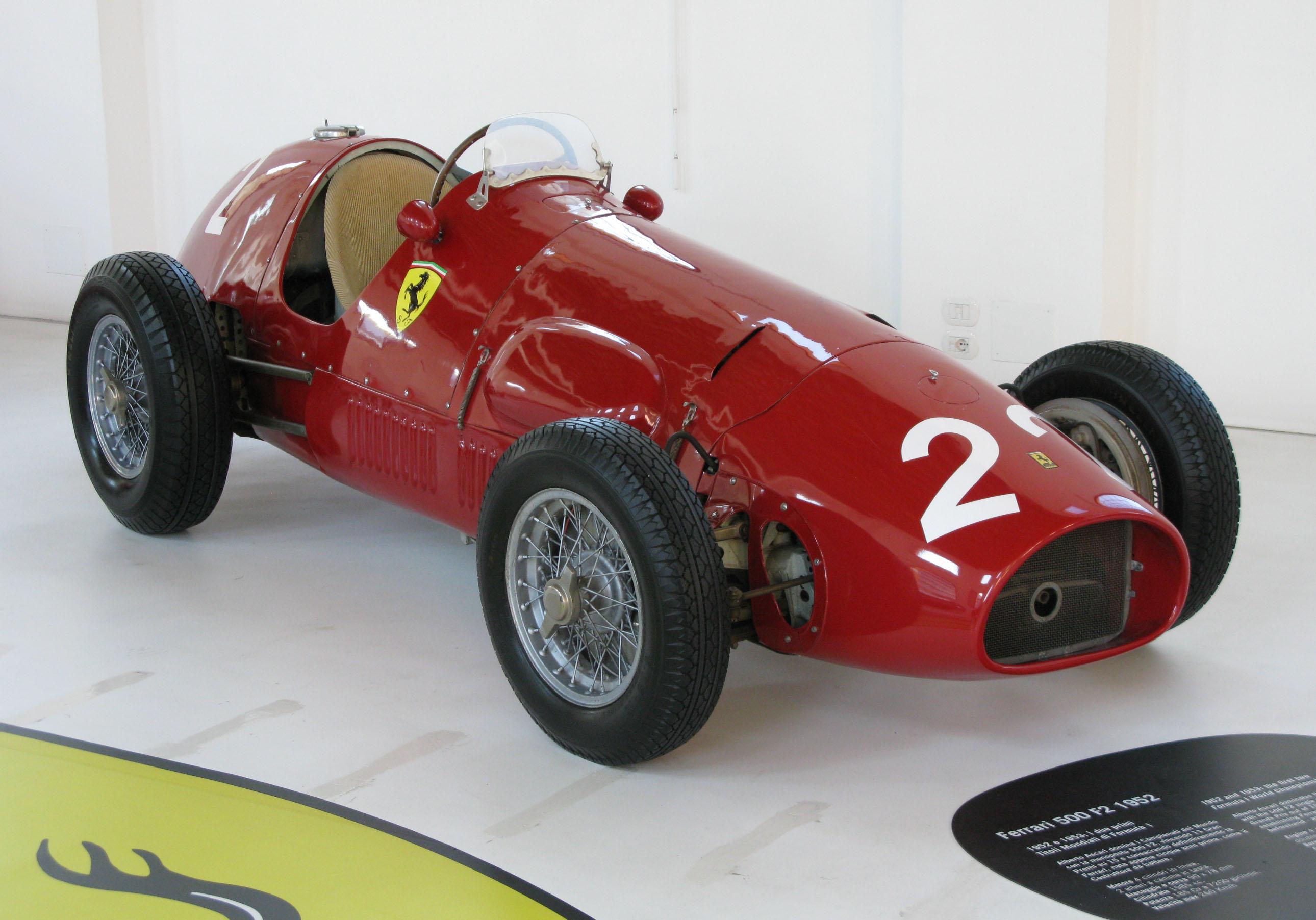
A Ferrari 500 F2 on museum display, photographed in 2014. A contemporary view of a racing car from Ferrari's early competition years.
Photography: Herranderssvensson / Wikimedia Commons · Ferrari 500 fr · CC BY-SA 4.0

Resized and delivered in an optimized format; no crop or retouching in this article.
The Man in Dark Glasses
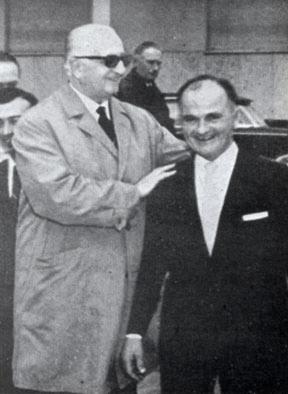
Enzo Ferrari with Ilario Bandini in Forlì, 1964.
Image: Registro bandini / Wikimedia Commons · Ilario Bandini ed Enzo Ferrari · CC BY-SA 3.0

Original JPEG displayed without enlargement; no crop or retouching.
Few industrialists developed a public image as distinctive as Enzo Ferrari.
His dark glasses, serious expression and increasingly private existence contributed to an almost theatrical presence.
He appeared less like the head of a conventional car company than the guardian of an institution.
This image was particularly powerful because Ferrari itself occupied a strange position between engineering business and cultural phenomenon.
The company produced machines, but the public increasingly consumed stories.
Its cars became associated with glamour, celebrity and wealth. Yet the man at the centre of the organisation remained strongly identified with the racing world.
That tension is fundamental to Ferrari's identity.
The company sold desire, but its founder pursued victory.
When a Name Becomes More Than a Name
The Ferrari badge is now among the most recognisable symbols in luxury.
Its meaning extends far beyond automobiles.
It suggests speed, exclusivity, Italian identity and a particular kind of uncompromising ambition.
But a strong brand does not necessarily mean every product associated with it offers exceptional value.
The price of a Ferrari reflects engineering, performance, limited supply, reputation and emotional demand. Those elements are real, but they are not interchangeable.
A buyer may be paying for extraordinary machinery, access to a desirable ownership community or the prestige of the name.
Often, they are paying for all three.
Understanding the difference is essential to understanding modern luxury.
Ferrari's greatest commercial achievement may be that the mythology surrounding the cars became almost as valuable as the machines themselves.
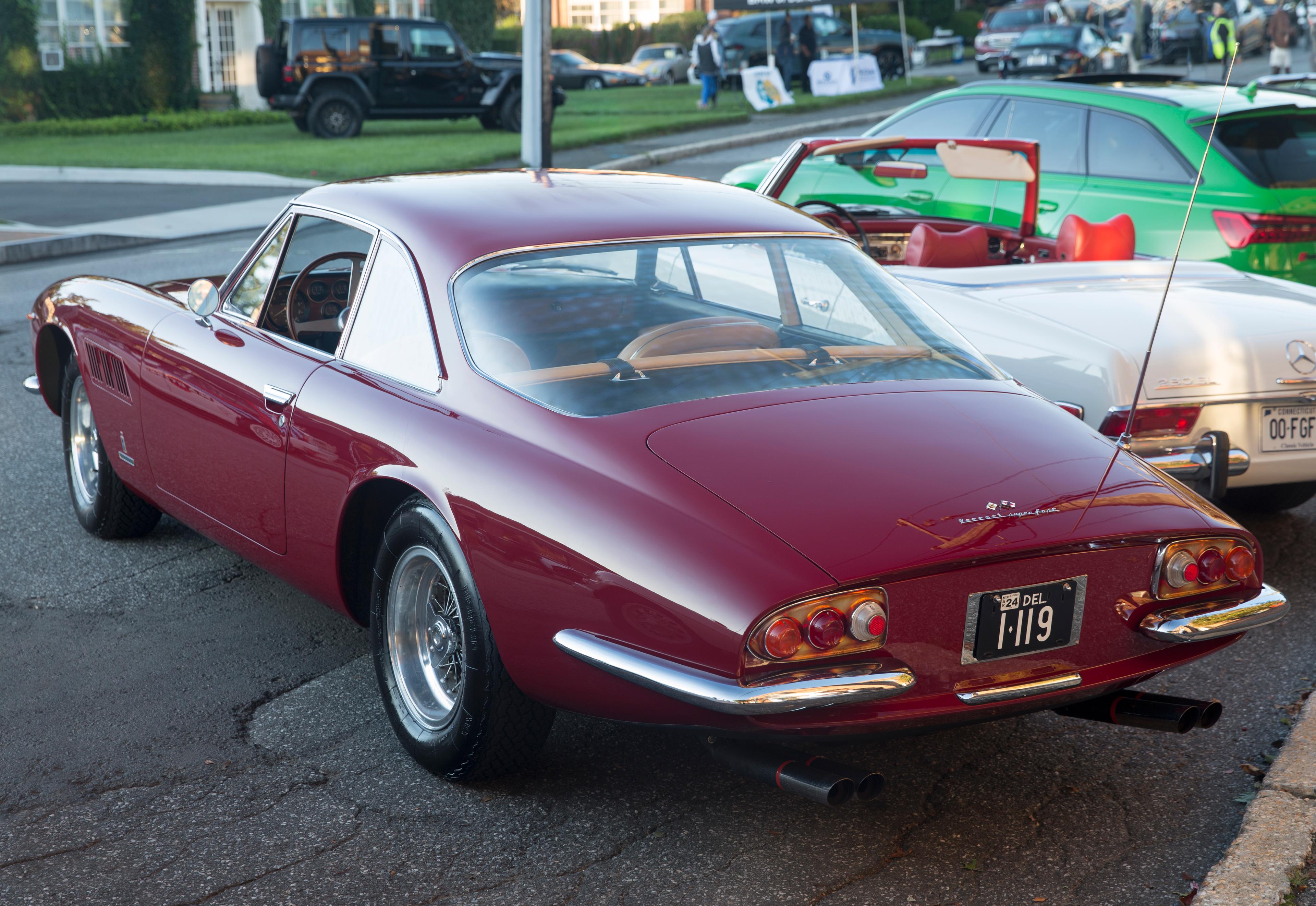
A Ferrari 500 Superfast at Caffeine & Carburetors in New Canaan, Connecticut, photographed in 2023.
Photography: Mr.choppers / Wikimedia Commons · 1964 Ferrari 500 Superfast in Dark Red, rear left · CC BY-SA 3.0

Resized and delivered in an optimized format; no crop or retouching in this article.
An Imperfect Legacy
Enzo Ferrari died in 1988, leaving behind a company whose influence reached far beyond the racetrack.
His legacy includes engineering achievement, sporting triumph, extraordinary design and a brand identity that has endured through profound changes in the automotive industry.
It also includes conflict, tragedy and a management culture shaped by the relentless demands of competition.
To acknowledge those contradictions is not to diminish his importance.
It is to understand it more fully.
The most interesting icons are rarely uncomplicated people. Their achievements often emerge from qualities that can be admirable in one context and destructive in another.
Ferrari's determination helped create something extraordinary.
It also made him a difficult man to work with and a complicated figure to celebrate.
The Enduring Myth
There are countless successful automotive entrepreneurs, but very few whose personal identities remain inseparable from the companies they created.
Enzo Ferrari belongs to that small group.
The cars have changed. The technology has advanced. The company has become an international luxury business with a reach that its founder could scarcely have imagined in its early years.
Yet the central idea remains remarkably consistent.
A Ferrari is not intended to be merely adequate.
It is supposed to provoke emotion, admiration and desire.
That expectation is Enzo Ferrari's enduring contribution — and perhaps his most demanding inheritance.
He built a company around the conviction that winning mattered more than comfort.
The world turned that conviction into luxury.
And somewhere between the racetrack and the showroom, a man became a myth.