Icons / No. 028
Jane Birkin: The Woman Who Never Needed a Perfect Handbag
On a wicker basket, an extraordinary namesake and the difference between owning luxury and living with it.
Before the handbag there was the basket. In photographs of Jane Birkin, it appears in places where a carefully coordinated designer accessory might ordinarily have been expected. The wicker basket was practical, peculiar and unmistakably personal. It was not an attempt to look expensive. It was an attempt to carry things.
That small distinction offers a useful way into one of fashion's most curious stories. Birkin's name would eventually become attached to a handbag that ranks among the most recognizable symbols of luxury in the world. Yet her own style often seemed to resist the stiffness and perfection that luxury marketing can encourage.
It would be too easy to turn this contrast into a moral lesson: the woman was authentic, the bag became a status symbol, and commerce ruined everything. The reality is more interesting. The Birkin bag was conceived as a useful object. Its later life shows how usefulness, craftsmanship, celebrity and scarcity can become inseparable.
A life outside the display case

Jane Birkin at the Venice Film Festival in 2009.
Photography: nicolas genin · Jane Birkin cropped 2009.jpg · CC BY-SA 2.0

Displayed full frame; resized and converted to WebP by the delivery pipeline, without retouching. Journal thumbnails may be cropped. Image adaptations retain CC BY-SA 2.0.
Birkin's public image was shaped by music, cinema and the culture of the late 1960s and 1970s. She became closely associated with France while retaining an unmistakably British identity. Her appeal was never reducible to a single outfit. It lived in the apparent looseness of the whole arrangement: hair that did not seem overmanaged, clothes worn with ease, a willingness to mix the ordinary with the beautiful.
Her style has since been reproduced in countless mood boards. This is the fate of nearly every icon: what once looked personal becomes a formula. The basket, the jeans, the white shirt and the casually carried bag can be assembled by anyone. But a formula cannot reproduce the life that made the pieces interesting.
What looks effortless in a photograph may have been the result of habit, preference and circumstance. The danger in calling it effortless is that we erase the individuality behind it. Birkin did not become an icon because she discovered a secret shopping list. The shopping lists came later.
How a practical problem became a legend
The familiar account of the Hermès Birkin begins with an encounter between Jane Birkin and Jean-Louis Dumas, then the company's chairman, on an aircraft in the 1980s. Their conversation concerned the difficulty of finding a suitable everyday bag. The design that followed was roomy, structured and intended to be useful.
That origin story is irresistible because it brings luxury down to human scale. A woman needed somewhere to put her belongings. A leather-goods house responded with a design. The idea is almost modest compared with what the bag later came to represent.
The Birkin's design, materials and craftsmanship deserve serious attention. So does the work required to produce and maintain a fine leather object. But craftsmanship alone does not explain why one particular handbag has acquired such exceptional cultural weight. For that, the story must include celebrity, desirability, restricted access and the way people use objects to signal position.
A good bag can carry a life. An iconic bag can also carry a social message. The two functions overlap, but they are not the same.
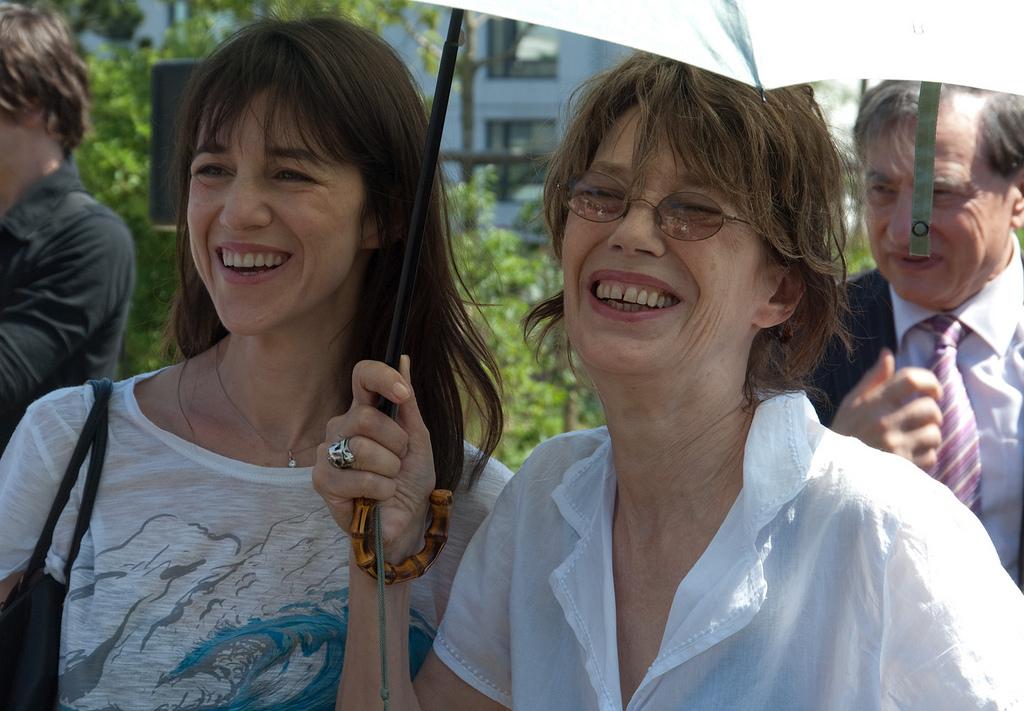
Jane Birkin and Charlotte Gainsbourg at the inauguration of the Jardin Serge Gainsbourg in Paris, 8 July 2010.
Photography: Olivier Pacteau · Charlotte Gainsbourg and Jane Birkin 2011.jpg · CC BY 2.0

Displayed full frame; resized and converted to WebP by the delivery pipeline, without retouching. Journal thumbnails may be cropped.
The bag as a living thing
One of the most revealing aspects of Birkin's relationship with her namesake was the way she treated bags as personal belongings rather than untouchable trophies. Photographs of her customized, well-used bags stand in striking contrast to the pristine examples that dominate resale listings and carefully lit collections.
The difference is philosophical. Some luxury objects are bought to be preserved. Others are bought to accompany a person through ordinary days. A scuff may be a defect in one worldview and evidence of a life in another.
There is no obligation to mistreat an expensive possession. Caring for good leather is sensible, and keeping a bag in beautiful condition can be a pleasure. Yet the fear of diminishing resale value can become so strong that the owner begins to serve the object. A handbag designed to carry things turns into something that must itself be protected from the world.
Birkin's example suggests another possibility. Personalization, wear and even imperfection can make an object more intimate. A bag may become more valuable to its owner as it becomes less perfect to a buyer.
When a name becomes a market
The Birkin is now discussed not only in fashion but also in the language of collecting, allocation and investment. Such conversations can be fascinating, but they risk making the woman behind the name disappear. Jane Birkin was an artist with a career, a voice and a public life extending far beyond a leather accessory.
It is also worth distinguishing market price from enduring value. The prices people are willing to pay for certain bags can be influenced by access, condition, materials, fashion and speculation. None of those variables guarantees a return. A luxury purchase is not automatically an investment because it is expensive or difficult to obtain.
The broader question is what happens when an object becomes so culturally important that using it seems almost beside the point. A bag originally linked to the need for practical space becomes a vessel for dreams of recognition. This is neither entirely absurd nor entirely admirable. It is a revealing expression of how people assign meaning to possessions.

Jane Birkin in Warsaw, 19 April 2017.
Photography: Mariusz Kubik · 2017.04.19. Jane Birkin Warsaw Poland Fot Mariusz Kubik.JPG · CC BY 4.0

Displayed full frame; resized and converted to WebP by the delivery pipeline, without retouching. Journal thumbnails may be cropped.
The elegance of not protecting the myth
There is a temptation to claim that Birkin herself was above luxury. That would be another simplification. She lived in worlds where beauty, fashion and fame mattered. The more interesting observation is that she appeared willing to make luxury subordinate to personality.
A beautiful object could be worn, altered and lived with. It did not have to dictate the terms of the relationship. In a culture increasingly concerned with authentication, condition reports and the preservation of value, that attitude feels almost radical.
The wicker basket and the Birkin bag are not opposites. Both can be understood as containers for an actual life. One is ordinary and eccentric; the other is a masterpiece of modern luxury mythology. Their common purpose is easy to forget when the second becomes a symbol.
Perhaps the best tribute to Jane Birkin is not to buy the bag that bears her name, or to imitate the basket that preceded it. It is to remember that personal style begins when an object becomes yours. The handbag may be famous. The way you live with it is the part that cannot be purchased.