Icons / No. 032
Muhammad Ali: The Luxury of Being Unmistakably Yourself
On presence, self-invention and a kind of distinction no luxury house can manufacture.
Muhammad Ali understood something that fashion brands spend fortunes trying to achieve: recognition before explanation. A photograph of him, a gesture or a few words could announce a personality so distinct that the audience knew who was speaking before the name appeared.
This is not a story about a watch collection or a particular suit. It is a story about the oldest promise in luxury: the desire to be singular. Ali's life complicates that promise because his distinctiveness was not conferred by an object. It was created through performance, conviction, wit, risk and public conflict.
For a magazine that examines how people use possessions to express identity, he offers an important counterexample. Sometimes the person is more memorable than anything they could wear.
Making a name
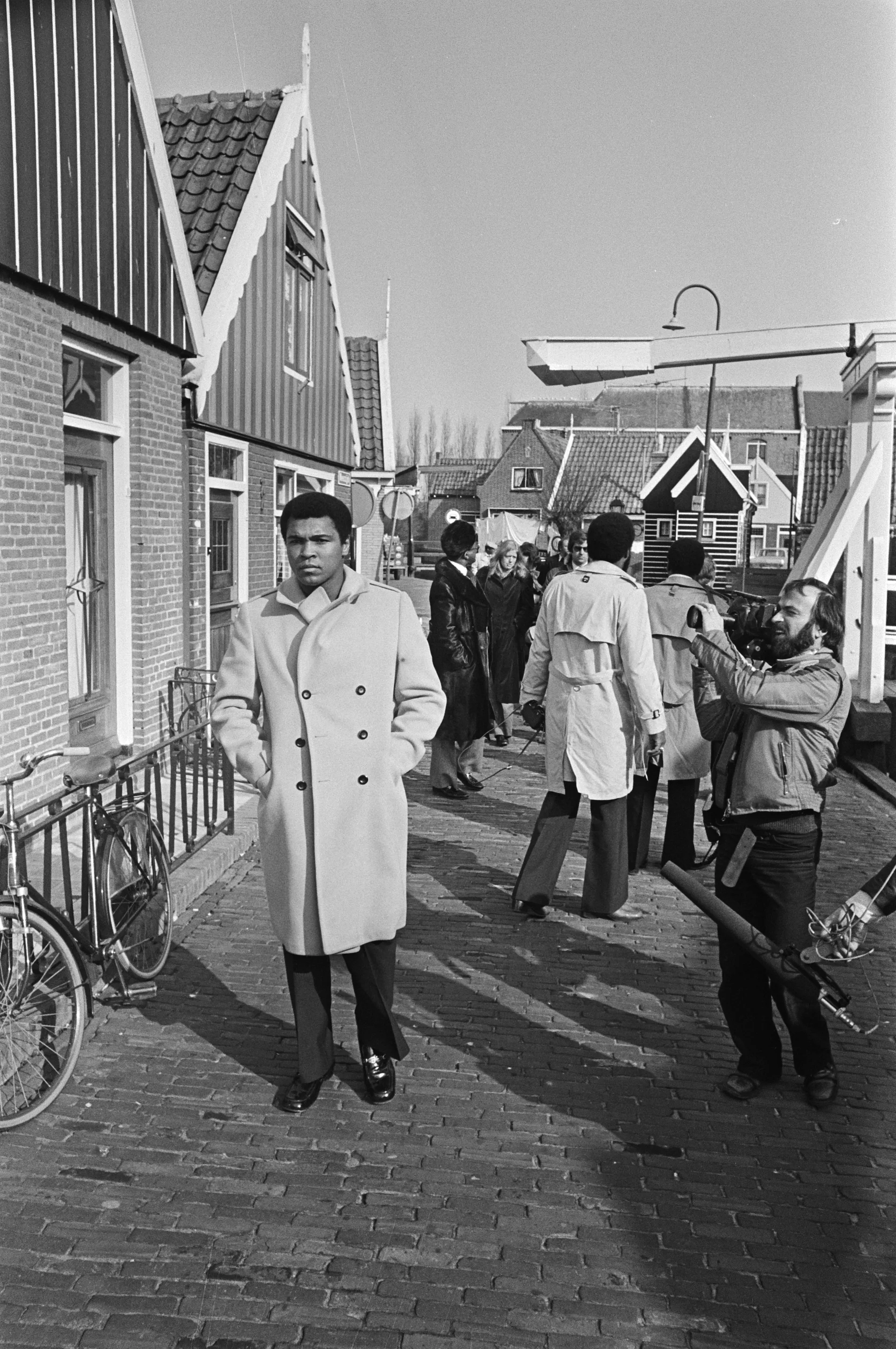
Muhammad Ali walking in Volendam, 8 March 1976.
Photography: Bert Verhoeff / Anefo / Nationaal Archief · Mohammed Ali bezoekt Volendam; Ali wandelt in Volendam · CC0 1.0
Displayed full frame; resized and converted to WebP by the delivery pipeline, without retouching. Journal thumbnails may be cropped.
Born Cassius Clay in Louisville in 1942, the future champion became one of the most recognizable athletes in history. His boxing achievements were extraordinary, but they do not alone explain his cultural presence. He spoke about himself with a theatrical confidence that turned interviews into performances. He understood rhythm, repetition and the power of a phrase.
Self-promotion was not incidental to his career. It was part of the spectacle, sometimes funny, sometimes abrasive and sometimes deliberately unsettling. Ali did not wait for others to decide how he should be described. He insisted on taking part in the description.
That insistence had consequences beyond entertainment. His adoption of the name Muhammad Ali and his public positions on religion, race and the Vietnam War made him a controversial figure in his own time. Any portrait that reduces him to a charmingly confident sportsman leaves out the stakes of his public identity.
His confidence was not merely a style. It could cost him opportunities, income and approval. That is a very different kind of commitment from buying an accessory that suggests rebellion.
The image and the body
Ali's boxing style was central to his mythology. The movement, speed and theatricality of his presence in the ring helped create a visual language unlike the conventional image of a heavyweight fighter. His body was both instrument and expression.
The connection to fashion is not as distant as it first appears. Clothes communicate through movement as much as through design. A beautifully cut suit can look lifeless on someone who feels trapped in it. A simple shirt can become memorable when the wearer moves with ease. Ali's public presence made that principle unusually clear.
Yet it would be a mistake to turn a fighter's physical gifts into a shopping metaphor. Boxing carries real bodily risk. Ali's later health struggles are part of the human story behind the images. The same body that helped create the legend bore the costs of an exceptionally demanding career.
An icon should be admired as a person, not consumed as an endlessly renewable symbol of confidence.
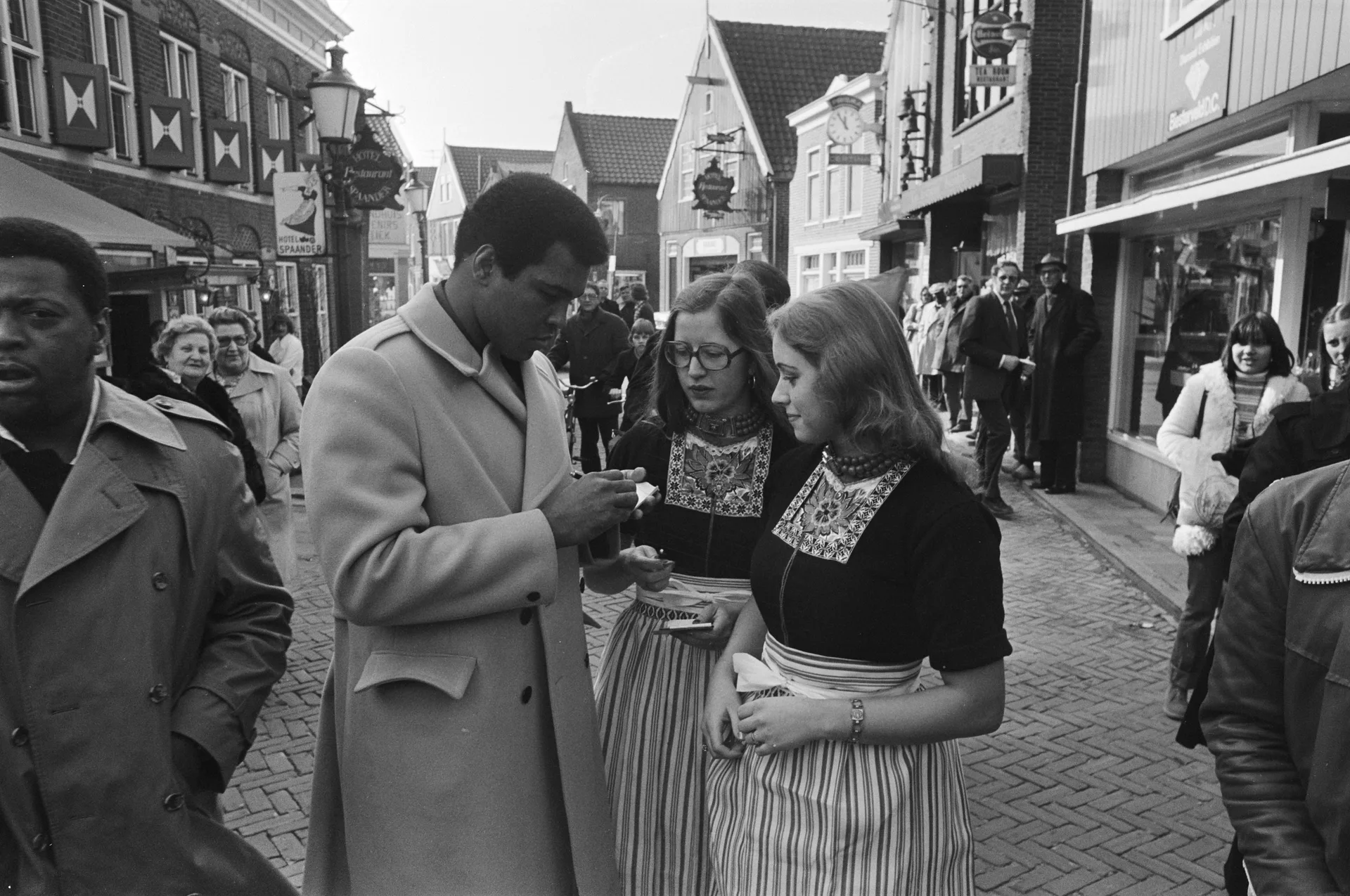
Muhammad Ali signing autographs in Volendam, 8 March 1976.
Photography: Bert Verhoeff / Anefo / Nationaal Archief · Mohammed Ali bezoekt Volendam; Ali deelt handtekeningen uit aan Volendamse meisjes · CC0 1.0
Displayed full frame; resized and converted to WebP by the delivery pipeline, without retouching. Journal thumbnails may be cropped.
The business of being different
Modern luxury is filled with invitations to express individuality. Limited editions, personalized initials and exclusive access all promise to distinguish the buyer from the crowd. Some of these products are genuinely beautiful. But there is a paradox in mass-producing uniqueness.
If a brand can sell the same emblem of distinction to thousands of customers, what exactly has been made unique? The object may be rare relative to the market, but it cannot supply a personality. At best, it gives the owner a language through which to express one.
Ali's example reveals the difference between identity and its accessories. He built a public self through choices, words and actions that could not be separated from their consequences. His image was commercially valuable, but its source was not a luxury product.
That does not make consumption meaningless. We all use material things to express preferences and affiliations. A watch, jacket or pair of shoes may genuinely help someone feel more like themselves. The problem begins when the object is asked to do all the work.
The danger of a convenient legend
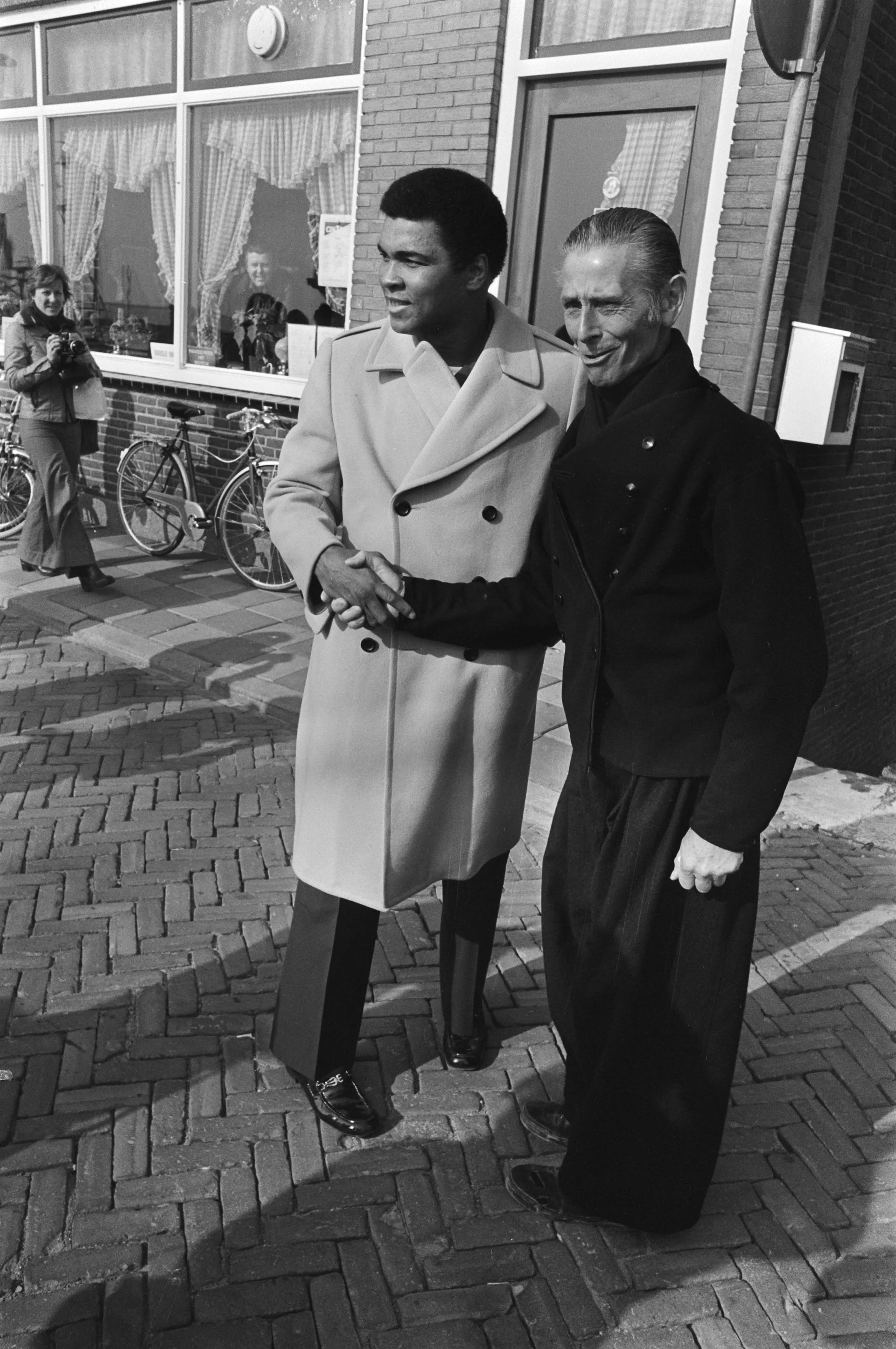
Muhammad Ali during his visit to Volendam, 8 March 1976.
Photography: Bert Verhoeff / Anefo / Nationaal Archief · Mohammed Ali bezoekt Volendam; Ali wandelt in Volendam · CC0 1.0
Displayed full frame; resized and converted to WebP by the delivery pipeline, without retouching. Journal thumbnails may be cropped.
There is a tendency to smooth difficult historical figures into inspirational slogans. Ali's most famous declarations are easy to reproduce on posters. His disagreements with institutions, the controversy around his decisions and the changes in public opinion are harder to fit into a neat brand campaign.
That difficulty is precisely why he remains interesting. He was not universally celebrated throughout his career. Admiration arrived unevenly, and the meaning of his actions was contested. An honest cultural portrait must make room for that complexity.
Luxury brands often borrow the visual language of courage and defiance while avoiding their costs. The result can be stylish but hollow. A rebellious image is easy to print on a T-shirt. Living with the consequences of dissent is something else.
Ali's legacy asks whether we admire boldness only when it is safe, or whether we can recognize it when it is inconvenient.
A different measure of wealth
There are forms of luxury that money can provide: privacy, comfort, beautiful materials, freedom from certain daily inconveniences. These are real benefits, and there is no need to pretend otherwise. But distinction is not one of the things money can reliably deliver.
The most recognizable people in history are not necessarily those who owned the rarest possessions. They are those whose presence changed how others saw the world. Ali's influence crossed sport, politics, language and popular culture because he was more than an image, even though he understood images exceptionally well.
For VILCERIQUE, this is a necessary reminder. We can admire a remarkable watch and still acknowledge that it cannot make its wearer remarkable. We can celebrate craft without confusing the maker's skill with the buyer's character.
The luxury of being unmistakably yourself is not available in a boutique. It requires choices that cannot be outsourced, and sometimes the willingness to be misunderstood.
Muhammad Ali did not become an icon by purchasing distinction. He made himself impossible to overlook. That is why the story belongs here.