When Beauty Was the Point
The Jaguar E-Type and the complicated relationship between exceptional design and everyday reality.
There are objects whose appeal requires explanation. Their importance becomes apparent only after learning about the materials, craftsmanship or historical circumstances behind them.
The Jaguar E-Type is not one of those objects.
Its beauty is immediate.
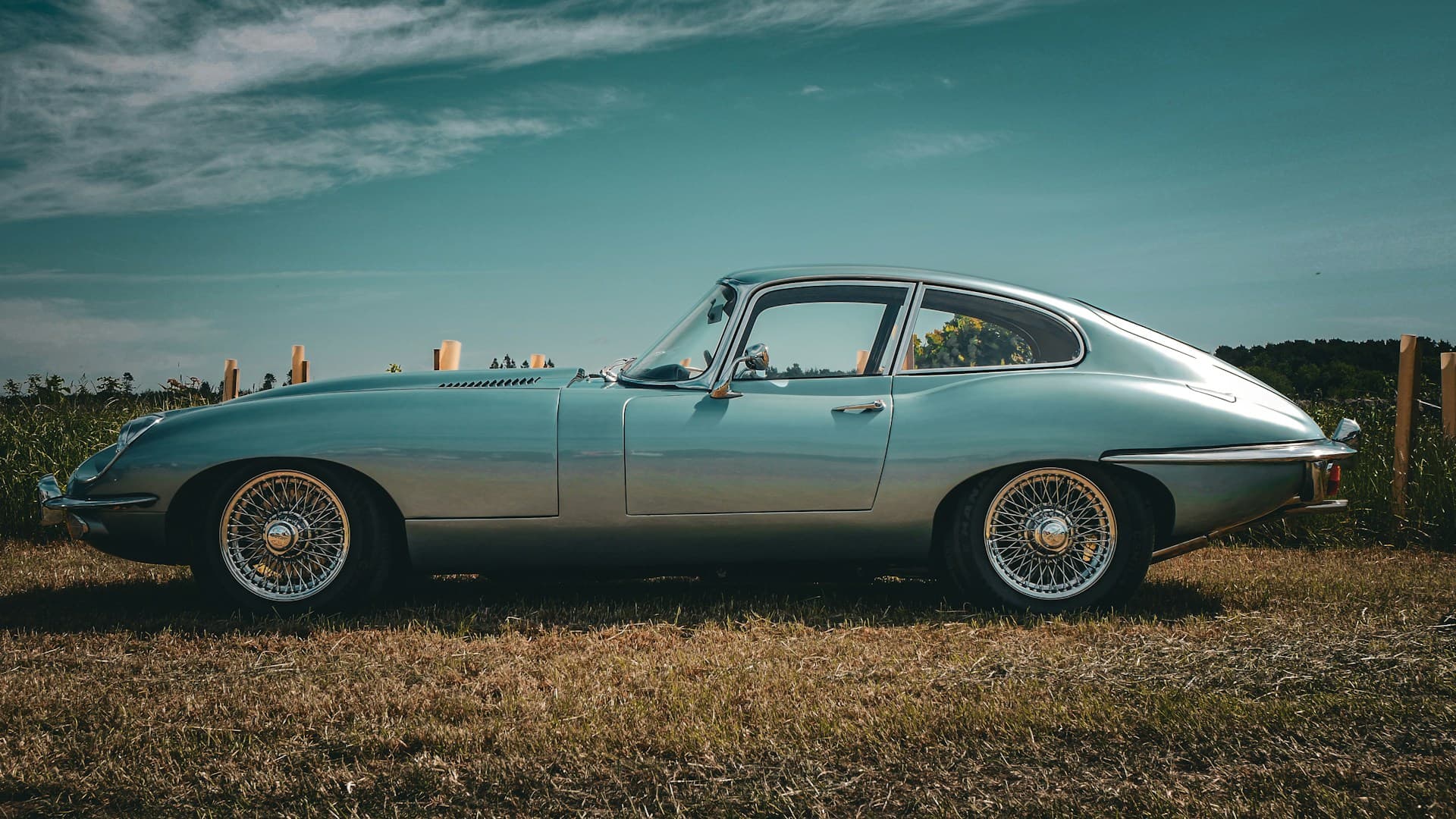
Introduced in 1961, the E-Type combined an extraordinarily long bonnet, a low cabin and a flowing body that seemed almost sculptural.
It looked unlike the ordinary cars surrounding it. More remarkably, it looked like something that might have been imagined without the usual constraints of industrial production.
The E-Type became one of the defining shapes of twentieth-century automotive design.
But its story is more interesting than beauty alone.
The Engineering Behind the Shape
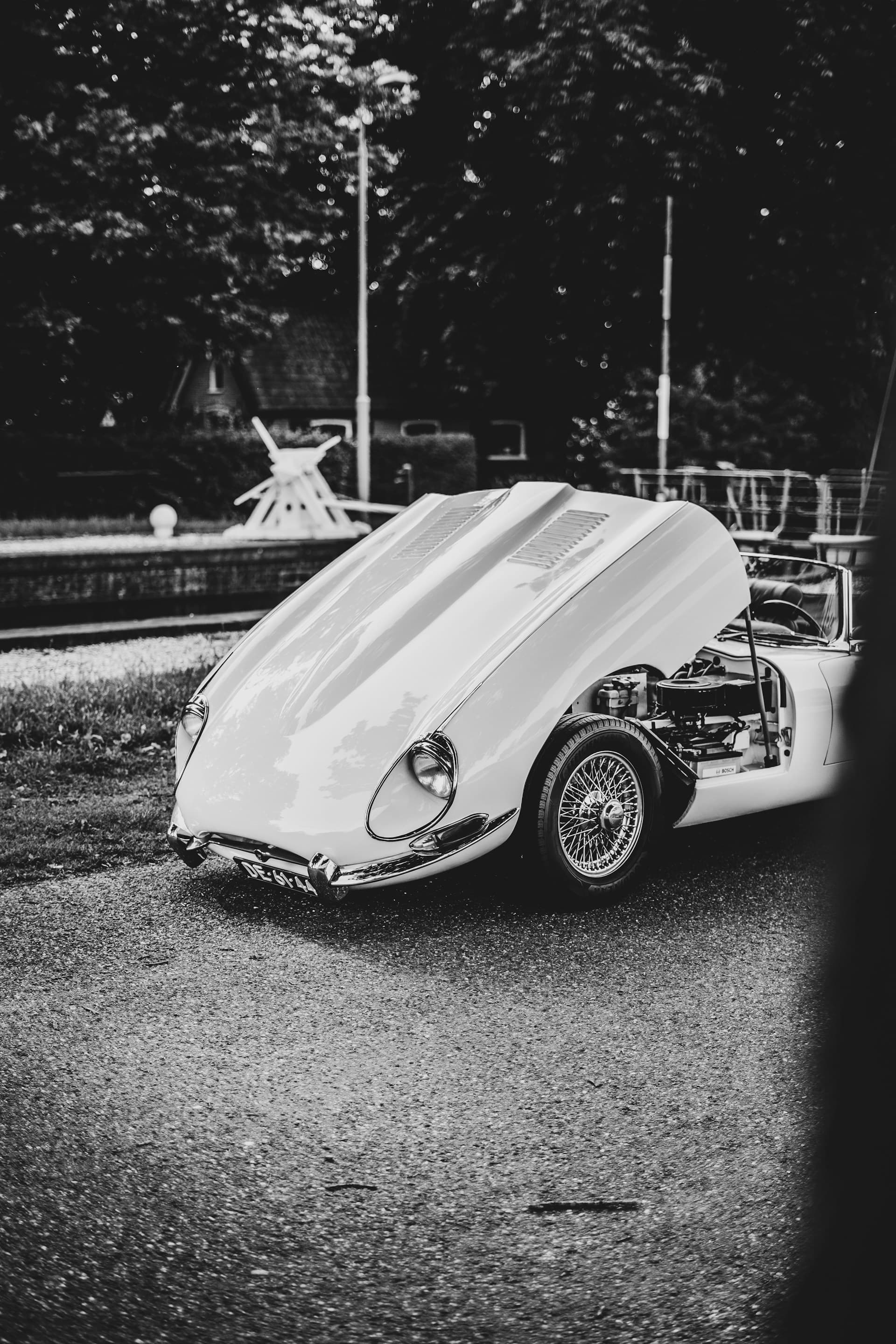
Jaguar's racing experience played an important role in the development of the E-Type.
The car drew on lessons learned from the successful C-Type and D-Type competition cars, including an emphasis on aerodynamics and advanced chassis engineering.
Its design was closely associated with aerodynamicist Malcolm Sayer, whose approach reflected technical and mathematical considerations as well as visual judgement.
This is an important distinction.
The E-Type was not simply a beautiful body placed over conventional engineering. Its appearance emerged partly from the attempt to create an efficient, capable sporting machine.
The result happened to be exceptionally elegant.
At its introduction, the E-Type also offered impressive performance at a price that compared favourably with some much more expensive rivals.
It was a powerful proposition: extraordinary looks, serious capability and relative value.
Beauty Without Excess
One of the E-Type's greatest achievements is the way its proportions create drama without excessive ornament.
Its long bonnet appears almost theatrical, yet the overall design remains coherent.
The car does not depend on decorative details to make an impression. Its identity comes from the relationship between surfaces, dimensions and movement.
That gives it an enduring quality.
Many designs that once appeared futuristic eventually become dated because their novelty depends on a particular fashion. The E-Type's appeal is rooted in something less temporary.
Its shape feels resolved.
It is possible to admire the car without knowing anything about its engine, production history or racing ancestry.
That is a rare accomplishment in industrial design.
The Other Side of the Romance
The E-Type is frequently celebrated as one of the most beautiful cars ever produced. But beauty does not guarantee an uncomplicated ownership experience.
Early examples can require careful maintenance, and corrosion is a serious consideration when assessing a surviving car.
Mechanical condition, restoration quality and the availability of knowledgeable specialists can make the difference between a rewarding classic and a costly frustration.
Its cabin, ergonomics and driving characteristics also belong to another era.
An E-Type may be wonderfully engaging on the right road, but it cannot offer the refinement, protection or convenience of a modern grand tourer.
The distinction matters.
A car can be a masterpiece of design without being the ideal vehicle for every journey.
Indeed, part of the E-Type's appeal may come from accepting its limitations rather than pretending they do not exist.
The Question of Value
The E-Type occupies an interesting position in the luxury world because its original appeal included an element of comparative affordability.
It offered design and performance that could compete with far more expensive machinery.
Today, desirable examples are valuable collectibles, and the economics of ownership have changed.
Yet the underlying lesson remains relevant.
Luxury is not necessarily defined by the highest price. Sometimes the more interesting achievement is delivering exceptional design without demanding the greatest possible expenditure.
That was part of Jaguar's original proposition.
And it remains a useful challenge to an industry in which price is too often treated as evidence of quality.

A Shape That Survived Its Era
More than six decades after its introduction, the E-Type still looks extraordinary.
Its continuing appeal is not simply nostalgia for the 1960s. The car demonstrates how strong proportions and coherent design can remain compelling long after the technology beneath them has become obsolete.
It also reminds us that beautiful objects are not always practical ones.
The E-Type may require patience, money and compromise. None of those things disappears because the car photographs beautifully.
But neither do they diminish the achievement of its design.
The Jaguar E-Type belongs to that small category of manufactured objects whose appearance has become part of our shared visual culture.
It is not perfect.
Perhaps that is why its beauty feels so human.