Watches / No. 030
The Watch That Doesn’t Need to Be a Rolex
On the Omega Seamaster, practical design, cinematic fame, and the freedom to choose differently.
A strange thing happens when someone buys a good mechanical watch. Sooner or later, the conversation turns to Rolex. Sometimes the comparison is useful. Often it obscures the object sitting directly in front of us.
The Omega Seamaster has lived for decades with this problem. It is a capable, recognisable watch family with its own history, design traditions and devoted following. Yet it is frequently discussed as an alternative to something else.
Perhaps that is the wrong question. Perhaps the Seamaster is most interesting when allowed to be itself.
A watch with a life before the cinema
The Seamaster name dates to 1948, when Omega introduced watches drawing on experience with robust timepieces and water-resistant construction. The collection subsequently developed in several directions, from relatively restrained dress-oriented models to more overtly technical diving watches.
It is important not to confuse these branches. A vintage Seamaster, a modern Aqua Terra and a Seamaster Diver 300M share a family name, not identical design or purpose. The details of movement, water resistance and construction depend on the particular reference.
The diving models made the name especially visible. Rotating bezels, luminous markers and legible dials gave them the vocabulary of practical instruments. The familiar wave-pattern dial and distinctive case details of the Diver 300M introduced a more expressive personality than some competitors.
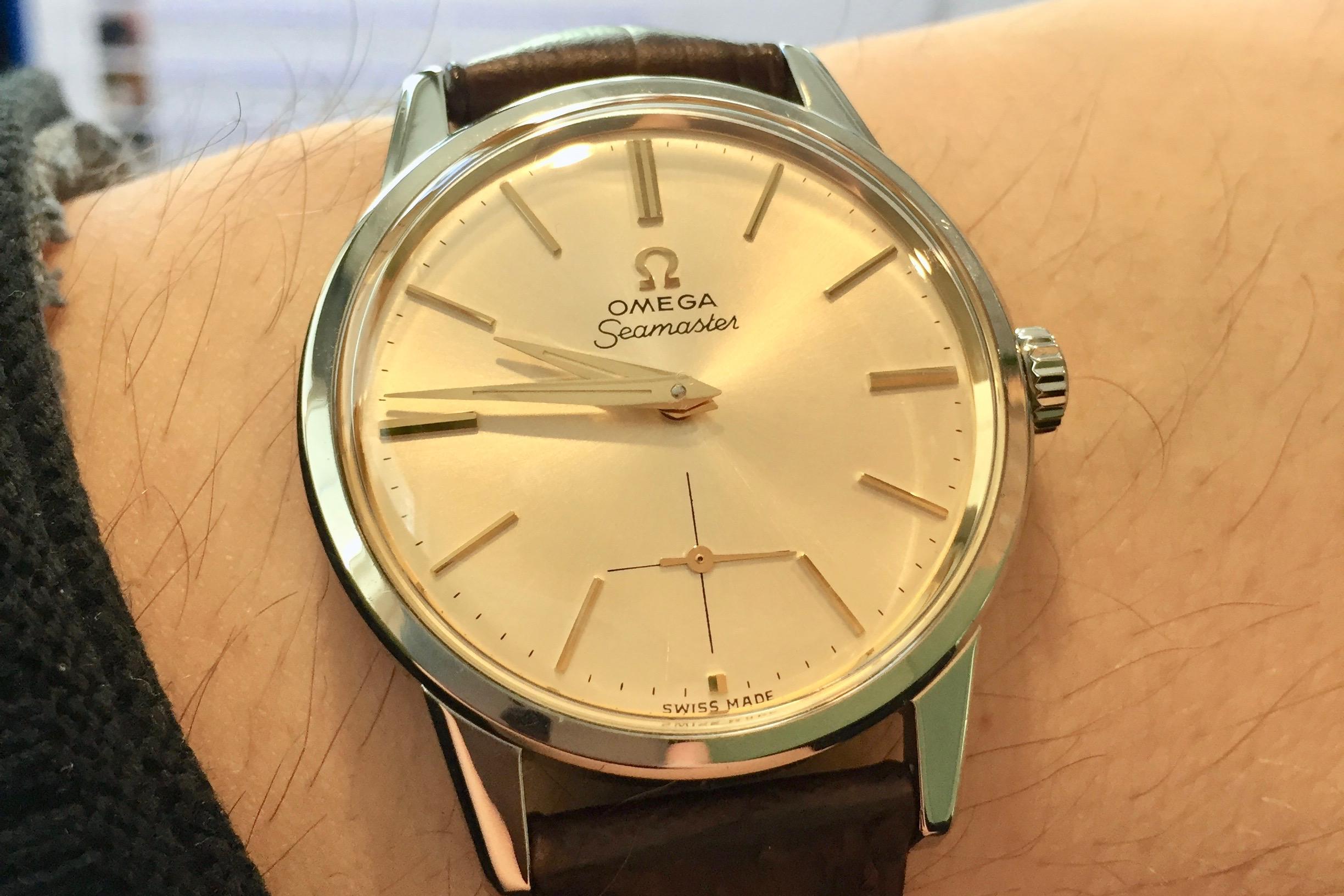
An Omega Seamaster dating to around 1960, photographed in 2018.
Photography: Kjetil Ree · Omega Seamaster ca. 1960.jpg · CC BY-SA 3.0

Displayed full frame; resized and converted to WebP by the delivery pipeline, without retouching. Journal thumbnails may be cropped. Image adaptations retain CC BY-SA 3.0.
The Bond effect
In 1995, James Bond began wearing an Omega Seamaster in GoldenEye. Cinema gave the watch an audience far beyond enthusiasts, and the association has continued through later films.
There is an irony here. A watch designed to communicate utility became desirable partly through fiction. The character who wore it made danger look elegant, and the object acquired some of that atmosphere by association.
Marketing certainly benefits from the relationship. But a good design must survive after the film ends. The Seamaster has done so because it remains recognisable on an ordinary wrist, not merely on a screen.
Quality is more than reputation
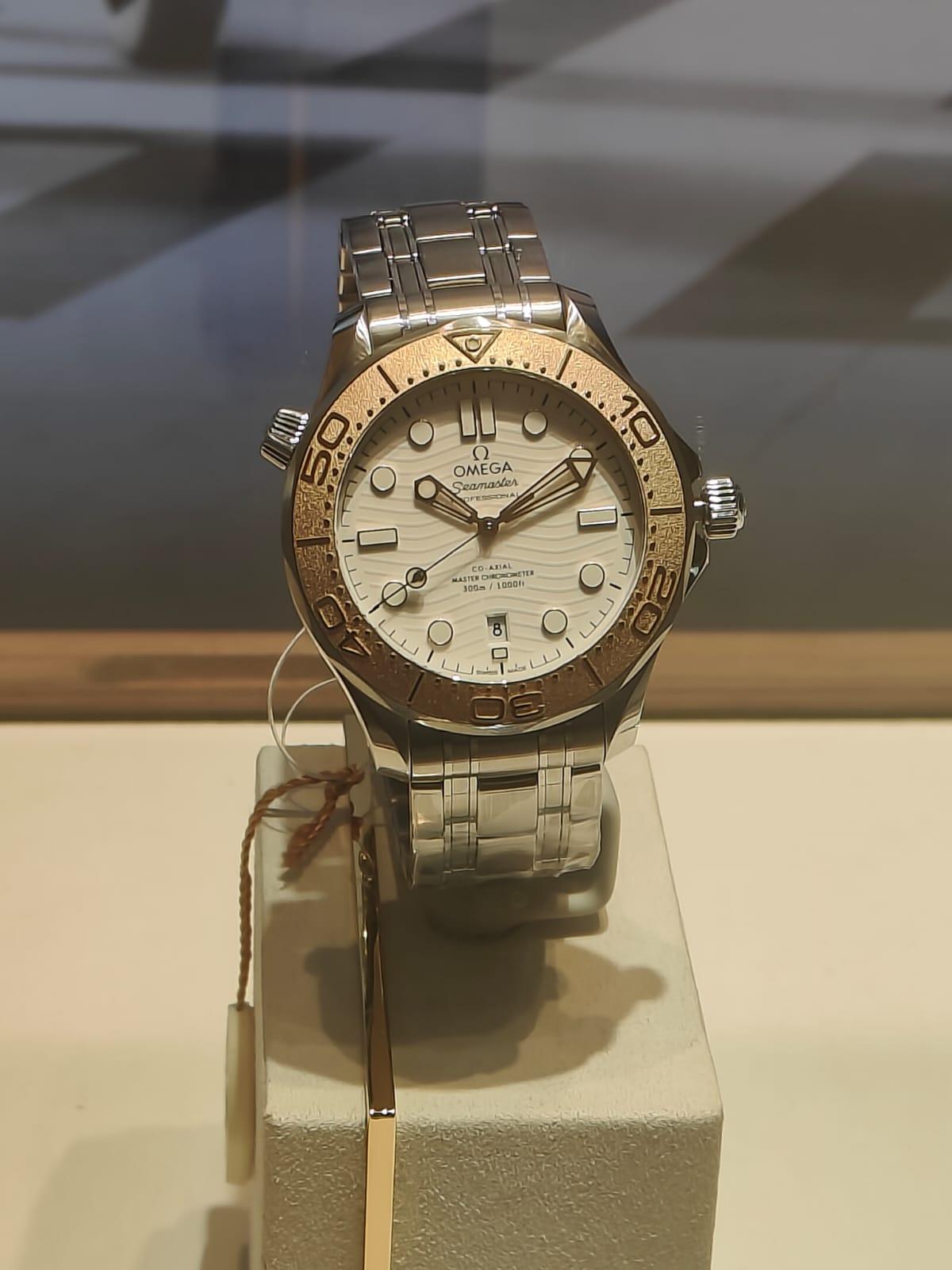
Contemporary Omega Seamaster Co-Axial, photographed in 2024.
Photography: Saptarshi2005 · Omega Seamaster Co-Axial.jpg · CC BY 4.0

Displayed full frame; resized and converted to WebP by the delivery pipeline, without retouching. Journal thumbnails may be cropped.
Modern Seamaster references offer different movement technologies and specifications. Some feature Omega's Co-Axial escapement and Master Chronometer certification, which involves testing against defined performance criteria, including magnetic resistance on qualifying models. These are substantive technical attributes, not simply decorative language.
They should still be evaluated reference by reference. A certification on one model says nothing automatic about a different or older Seamaster. Nor does a technical specification tell the entire story of wearing a watch. Bracelet comfort, case thickness, legibility, service access and proportions can matter more to an owner than a headline number.
The most useful question is not whether the watch is objectively superior to a Rolex Submariner. It is whether its particular balance of design, engineering, price and feel suits the person considering it.
The freedom of choosing
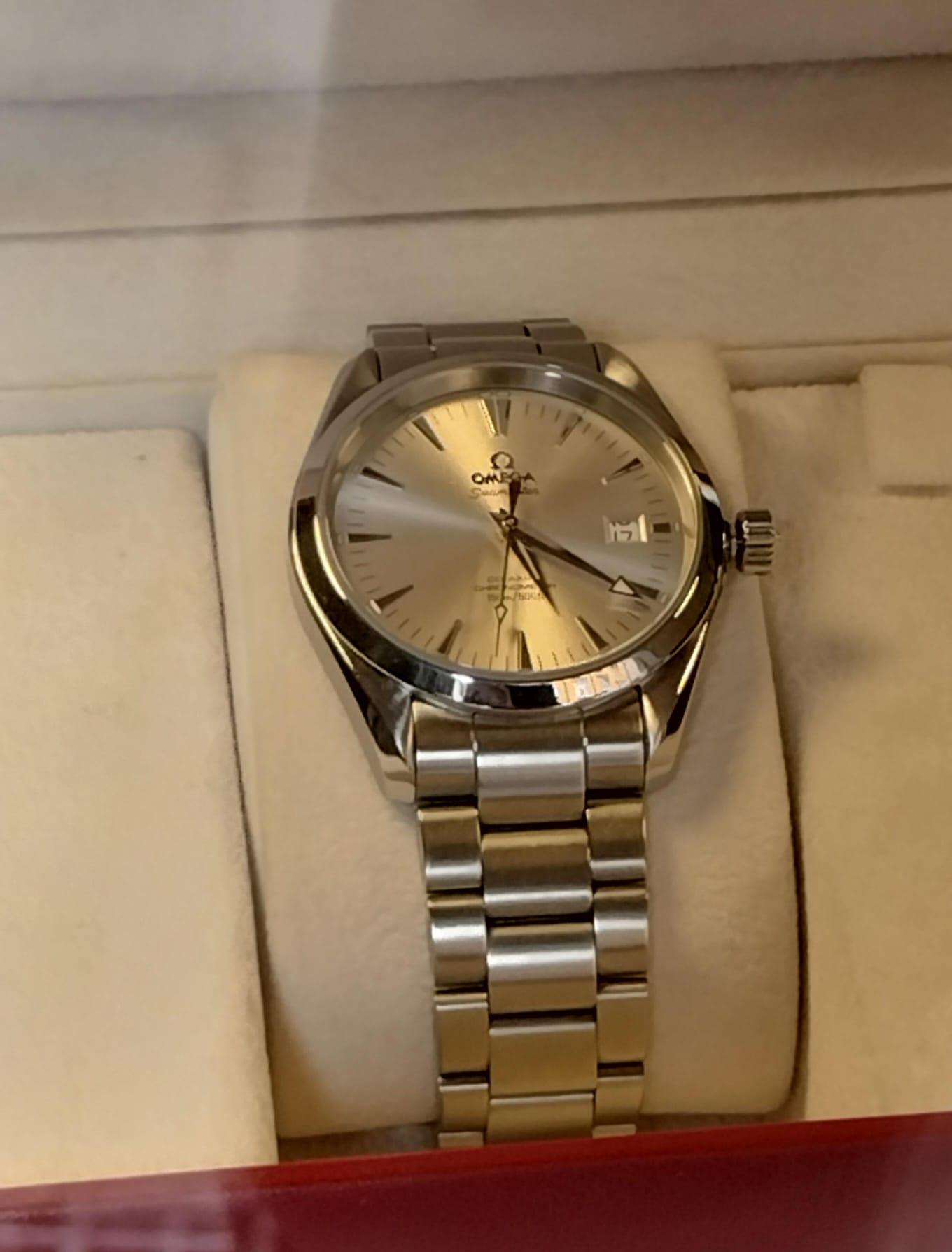
An Omega Seamaster Aqua Terra, photographed in 2025.
Photography: EMore98 · Omega Seamaster Aqua Terra.jpg · CC BY-SA 4.0

Displayed full frame; resized and converted to WebP by the delivery pipeline, without retouching. Journal thumbnails may be cropped. Image adaptations retain CC BY-SA 4.0.
The luxury watch market is full of social signals. Certain models are recognisable even to people who know almost nothing about watches. This visibility can be appealing. It can also become a burden, turning an intensely personal object into a public statement.
A Seamaster offers a different sort of satisfaction. It is not invisible, and it is not free from status. But its identity is less dependent on one dominant cultural script. It can be worn as a diving-inspired instrument, a design object, a connection to cinema or simply a very good everyday watch.
That flexibility is a strength. A watch should accompany a life, not require the owner to perform a role.
What time leaves behind
Mechanical watches invite us to think in decades. Scratches accumulate, bracelets loosen slightly, fashions shift. The object becomes less like a purchase and more like a witness.
A Seamaster that is worn regularly may become more meaningful than a rarer watch kept pristine. This is not an argument against collecting. It is a reminder that the value of a watch can grow in ways no auction result can measure.
The Omega Seamaster does not need to defeat Rolex in an imaginary contest. It has history, technical substance and a design language of its own. The right one may be worth owning for years.
That ought to be enough.