Rolex Submariner
When a Tool Became a Trophy
How a watch built for the depths became one of the most recognisable symbols of success above the surface.
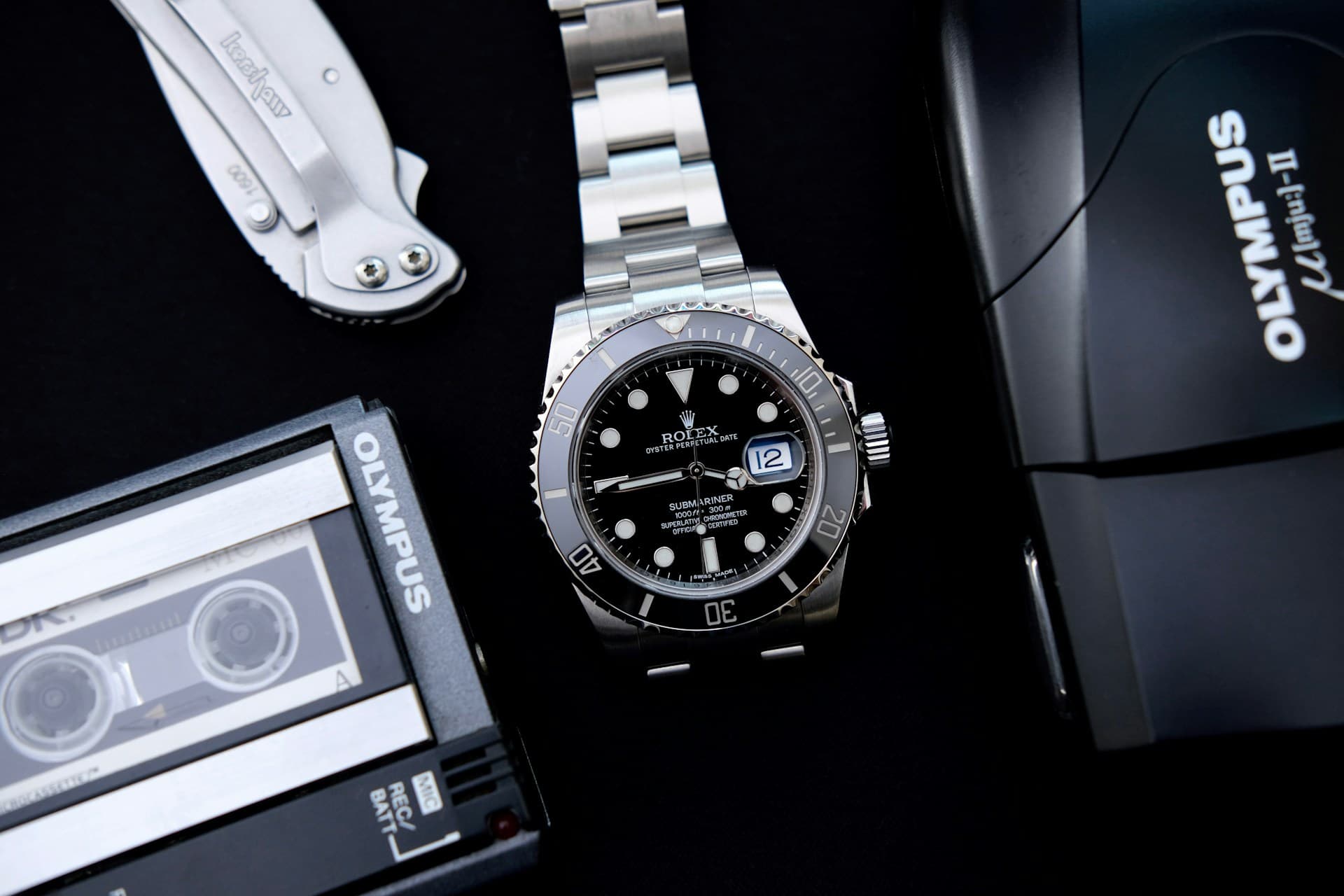
There is something faintly absurd about a watch engineered to survive hundreds of metres underwater spending most of its life above a shirt cuff.
The Rolex Submariner was conceived for an environment in which legibility, water resistance and reliability were matters of practical consequence. Today, it is just as likely to appear at a boardroom table, across a restaurant dinner, or in the discreetly calculated photograph of a successful man’s wrist. The sea is still part of its identity. It is simply no longer a prerequisite.
This is not a story about a useful object becoming useless. The Submariner remains a formidable mechanical watch. It is a story about something more curious: how usefulness can become mythology, and how mythology can become something people are willing to pay handsomely to wear.
Before it meant anything
In 1953, when Rolex introduced the Submariner, recreational diving was emerging alongside more demanding professional underwater work. The watch was rated water-resistant to 100 metres, and its rotating bezel offered a straightforward way to measure elapsed time. These were not decorative flourishes. They addressed a specific problem: a diver needed to know how long he had been below the surface, and he needed to be able to read the answer quickly.
The early Submariner belonged to a postwar world fascinated by exploration and equipment. It was a period in which objects could acquire glamour through competence. A camera, a car, a field jacket or a wristwatch might be desirable not because it was delicate, but because it was capable.
Rolex understood this language unusually well. The brand did not merely sell timekeeping. It attached its watches to the idea of people doing difficult things in difficult places. The Submariner fitted that story almost perfectly.
Its basic visual vocabulary was established early: a dark dial, clear hour markers, substantial hands and a timing bezel. Over the decades, proportions, materials and movements would change, but the central silhouette remained recognisable. That continuity matters. A Submariner from another era is not mistaken for an entirely different species of watch.
In luxury, recognition is a powerful form of currency.
The man who wore it with a dinner jacket
Then came James Bond.
Sean Connery wore a Rolex Submariner reference 6538 in Dr. No in 1962, and the association continued through his early Bond films. On screen, the watch crossed a boundary that its designers could hardly have scripted more effectively: it moved between danger and elegance without appearing out of place.
Bond could be in the water, in pursuit, or dressed for an evening that required a dinner jacket. The watch belonged in each setting. It suggested that the man wearing it might be prepared for something more demanding than the occasion immediately in front of him.
That is an extraordinary proposition for an accessory.
It also helps explain why the Submariner became more than a diver’s instrument. Bond did not make the watch technically superior. He made its technical identity socially seductive. Capability became character. A functional design began to imply a particular kind of man: composed, resourceful, self-possessed and perhaps a little dangerous.
The irony is that a watch can suggest these qualities without requiring any of them. You do not need to dive, navigate or even be particularly punctual to wear a Submariner. The object does some of the storytelling on your behalf.
The modern man's jewellery
Men have always worn adornment, although modern menswear has often preferred to describe it in other terms. A ring may be sentimental. Cufflinks are formal. A fine watch, conveniently, can be called an instrument.
This is one of the Submariner’s great cultural advantages. It is jewellery with a practical alibi.
The steel case, rotating bezel and robust bracelet communicate utility. The Rolex name communicates expense, achievement and access. Together, they allow a man to wear a conspicuously valuable object while insisting, with some justification, that he appreciates it for its engineering.
Both things may be true. They often are.
A Submariner can be purchased because someone loves mechanical watches, because it represents a personal milestone, because its design has barely needed explaining for generations, or because it is unmistakably a Rolex. These motives are not mutually exclusive, and pretending that they are would make the subject less interesting.
The question is not whether the watch signals status. It does, at least in circles that recognise it. The more revealing question is why that signal remains attractive even to people who consider themselves indifferent to status.
Perhaps the answer lies in its restraint. A steel Submariner is not the loudest luxury object one can buy. It has no need to be covered in precious stones or dramatic ornament. Yet its outline is sufficiently familiar that a small glimpse beneath a cuff can carry considerable meaning.
Understatement, after all, works best when somebody understands the reference.
The quality beneath the reputation
It would be easy to dismiss the Submariner as a triumph of branding. It would also be unfair.
The modern no-date Submariner, reference 124060, uses a 41 mm Oystersteel case, a self-winding Rolex calibre 3230 and a movement with approximately 70 hours of power reserve. Its water-resistance rating is 300 metres. The bezel rotates in one direction and carries a ceramic insert marked for 60 minutes. The bracelet includes a secure Oysterlock clasp and a Glidelock adjustment system that can be operated without tools.
None of this is imaginary luxury. These are tangible design and engineering decisions.
The one-way bezel has a particular logic: if accidentally moved during a dive, it can indicate more elapsed time rather than less. The luminous markers prioritise readability. The bracelet adjustment makes sense both over diving equipment and, rather more commonly, when a wrist changes size during an ordinary day.
The Submariner Date adds a date display and uses calibre 3235 in its contemporary steel form. Choosing between the two is partly a question of practicality, partly a question of aesthetics. The no-date dial has a symmetry that appeals to purists. The Date offers a convenience many wearers actually use.
But a good specification sheet is not the same thing as a good argument for any price.
Other manufacturers make highly capable diving watches. Some offer impressive finishing, reliable movements and substantial water resistance for considerably less money. If the question is simply how much one must spend to know the time underwater, the answer is nowhere near the cost of a Submariner.
Rolex's achievement is therefore twofold. It makes a genuinely accomplished watch, and it has made that accomplishment culturally legible to people who may never need its full capabilities.
The second achievement is much rarer than the first.
Why the design survives
Fashion tends to reward change. Icons are rewarded for refusing it.
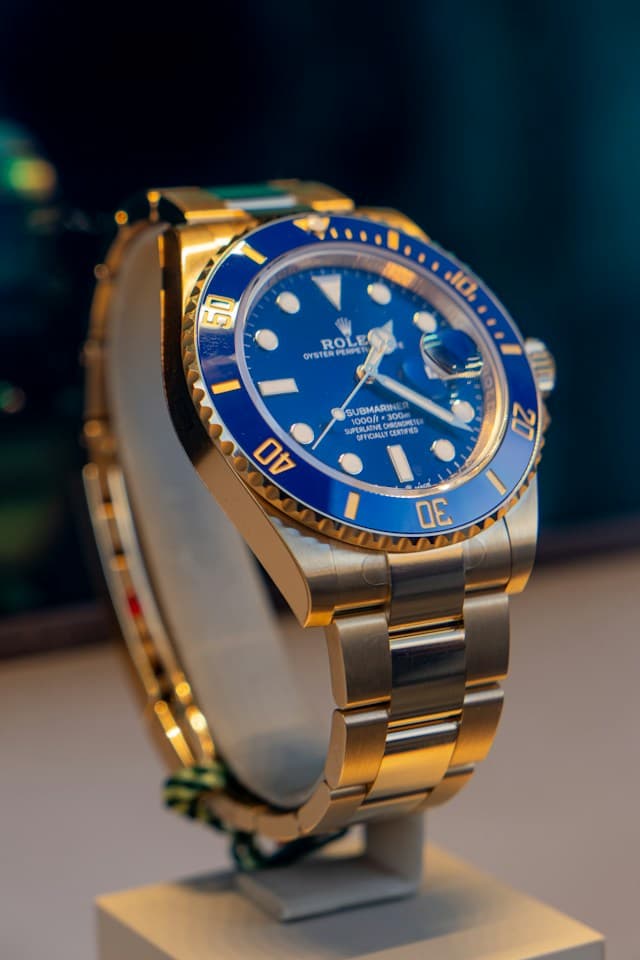
The Submariner has evolved, sometimes noticeably to enthusiasts, but never so dramatically that its ancestry becomes obscure. Its black dial, geometric markers, broad hands and rotating bezel form a design language that has been imitated so widely that it can almost seem generic.
That is the strange fate of an influential original: its success makes the world look increasingly like it.
There is a discipline to the design. The bezel gives the watch a strong perimeter. The markers are clear without being elaborate. The bracelet is purposeful rather than decorative. Even the modern ceramic bezel, with its glossy precision, remains tied to a practical idea established decades earlier.
Not every change has been universally loved. Enthusiasts can argue endlessly about case proportions, vintage charm, aluminium versus ceramic bezels, or whether older examples have a warmth newer watches cannot reproduce. Those disagreements are part of the appeal. The watch has been around long enough to have generations, rather than merely versions.
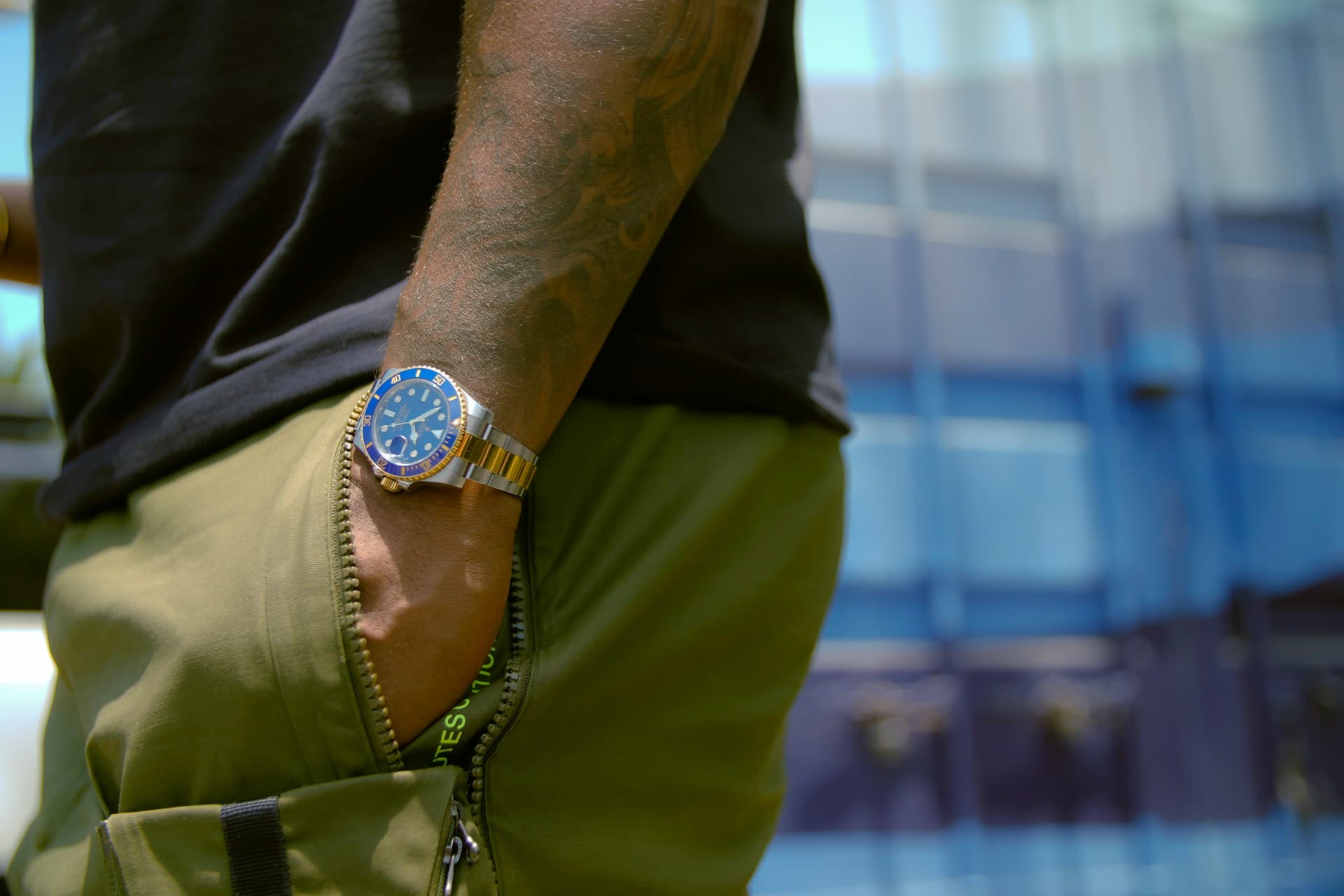
It also has the rare ability to look appropriate with clothes that seem to have little in common: a plain T-shirt, a wool coat, a suit, a linen shirt. It does not become a dress watch simply because it is worn with tailoring. It retains the faint suggestion of equipment, which is precisely what gives the combination its character.
The price of being recognised
There is, of course, a cost to becoming an icon.
A Submariner can attract attention that has little to do with watchmaking. Its owner may be admired, envied, stereotyped or quietly judged. To some, it signifies good taste and permanence. To others, it is the predictable purchase of a man who has achieved a certain level of income and would like the world to notice.
Both readings are reductive. Both exist.
The Submariner is also caught in the peculiar economics of luxury desirability. The conversation around a Rolex can drift away from the object itself and towards access, resale values and whether ownership represents a clever financial decision. A watch becomes something to acquire, protect, display and perhaps trade.
That is where the trophy threatens to eclipse the tool.
A mechanical watch is not a guaranteed investment, and its value is not a substitute for the pleasure of wearing it. Prices can move, servicing costs are real, and the attention attached to a recognisable luxury watch is not always welcome. The idea that a purchase becomes sensible merely because it carries a famous name deserves scrutiny.
A Submariner should be allowed to be what it is: a beautifully resolved, expensive, imperfectly rational object. It need not be defended as a financial strategy.
Does it still have something to prove?
The most interesting thing about the Submariner may be that it no longer needs to prove its original purpose.
Its technical competence is established. Its design is familiar. Its place in popular culture is secure. The modern wearer is not buying into an unknown experiment. He is buying into a story that has already survived decades of changing tastes.
That brings comfort, but also a certain predictability. Choosing a Submariner is rarely a radical act of individual style. It is, in many ways, the safe choice among conspicuous luxury watches. A person who wants something obscure, eccentric or unrecognisable will probably look elsewhere.
And yet there is something admirable about an object that can remain desirable without constantly reinventing itself. In a market built on novelty, continuity is its own kind of confidence.
The Submariner's great contradiction is also its great strength. It is a serious tool that most owners will never use seriously; an understated object that almost everyone in the right room will recognise; a watch associated with individual achievement that thousands of other successful people have chosen for exactly the same reason.
It began as an answer to a practical question: how do you tell the time beneath the sea?
Today it answers another, much less precise question: what does the watch on a man's wrist say about the life he has built, or the life he wants others to imagine?
The first question required engineering. The second created an icon.
And somewhere between the two, the tool became a trophy.
Sources and fact-checking
The article is an independent cultural and product perspective, not a hands-on review. No personal ownership or wear-testing is claimed.
- Rolex, Submariner — Defying the Unknown: https://www.rolex.com/watches/submariner.html — 1953 launch, original 100 m rating, modern 300 m rating.
- Rolex, From Tool Watch to Icon: https://www.rolex.com/watches/submariner/from-tool-watch-to-icon — historical development, 2020 redesign, movement generations.
- Rolex, Submariner ref. 124060: https://www.rolex.com/watches/submariner/m124060-0001.html — modern specifications and bracelet details.
- Rolex, Submariner Features: https://www.rolex.com/watches/submariner/features — diving functions, bezel and water resistance.
- Hodinkee, Sean Connery Originates the Role of James Bond Wearing a Rolex Submariner Ref. 6538 in Dr. No: https://www.hodinkee.com/articles/sean-connery-originates-the-role-of-james-bond-wearing-a-rolex-submariner-ref-6538-in-dr-no — Bond watch identification and historical nuance.