The VILCERIQUE Journal / Essay No. 012
The Price
of Belonging
On waiting lists, velvet ropes, and the extraordinary things we do to feel exceptional.
October 26, 2026·Culture / Brands / Fashion
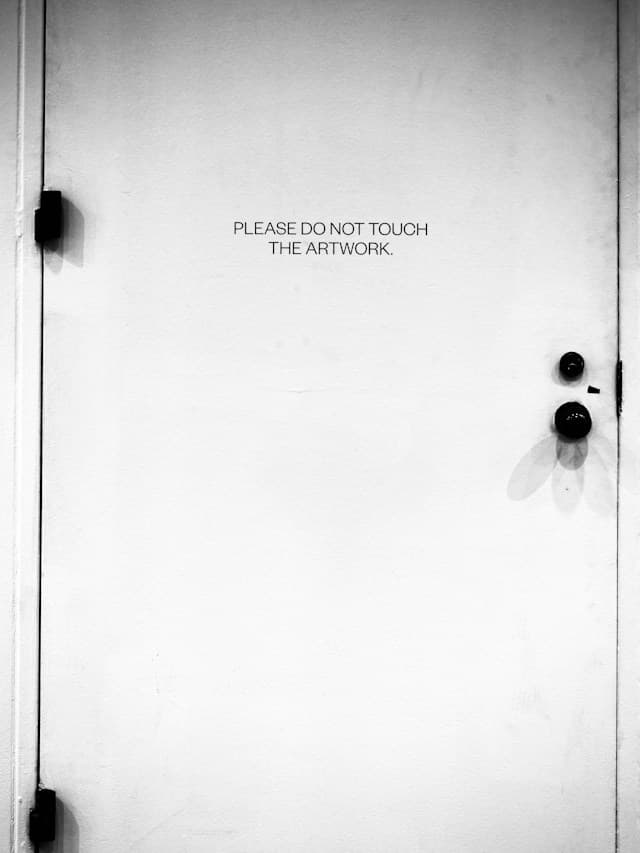
The Door That Would Not Open
Imagine two shops.
They stand on the same elegant street.
Both sell beautifully made leather goods. Both employ skilled craftspeople. Both offer excellent service.
In the first shop, you are welcomed inside.
You examine the merchandise. You ask questions. You discover something you love.
If you can afford it, you may buy it.
In the second shop, the object you want is not available to you.
Not today.
Perhaps not next month.
You may be encouraged to establish a relationship with the boutique. To demonstrate your interest. To wait.
And while you wait, something curious happens.
The object begins to occupy more space in your imagination.
It becomes not merely something you want to own.
It becomes something you want to be allowed to own.
The distinction is subtle.
But it changes everything.
When Access Becomes the Product
Luxury has always involved scarcity.
Rare materials are scarce.
Exceptional craftsmanship is scarce.
Time is scarce.
A hand-finished object that requires hundreds of hours of work cannot necessarily be produced in unlimited quantities.
There is nothing mysterious about this.
When supply is genuinely limited and demand is high, some people will have to wait.
But scarcity can also be cultivated.
Production can be controlled.
Distribution can be restricted.
Certain products can be reserved for selected clients.
And availability itself can become part of a brand's identity.
At that point, a company is selling more than an object.
It is selling access.
The customer is no longer simply deciding whether the product deserves their money.
The customer may begin wondering whether they deserve the opportunity to spend it.
That is a remarkable reversal of the ordinary relationship between buyer and seller.
And it can be extraordinarily effective.
The Psychology of the Unavailable
Human beings are not always rational about what they want.
We are influenced by context.
By comparison.
By what other people possess.
And by the possibility that something might be taken away before we obtain it.
Psychologists have long studied how scarcity can influence perceived value.
Something that appears difficult to obtain may seem more desirable, even when its practical qualities remain unchanged.
But scarcity is not a guarantee of value.
A rare object can be poorly made.
An exclusive experience can be disappointing.
And an expensive product can be less useful than an ordinary alternative.
We know this intellectually.
Yet emotionally, the unavailable has a peculiar attraction.
Perhaps because obtaining it offers two rewards.
The pleasure of the object itself.
And the satisfaction of having overcome the barrier.
Sometimes the second reward becomes more powerful than the first.
The purchase is no longer merely about a bag, a watch or a reservation.
It is about the story we can tell ourselves.
I was one of the people who got in.
The Velvet Rope
Outside a fashionable nightclub, a queue forms.
Inside, there may be excellent music.
Or perhaps the music is perfectly ordinary.
The drinks may be expensive.
The room may be crowded.
Yet people wait.
Not necessarily because they know the experience will be exceptional.
But because entry appears selective.
A velvet rope divides the pavement into two groups.
Those who are waiting.
And those who have been admitted.
The rope itself has almost no practical value.
Its power is symbolic.
It tells us that something desirable exists on the other side.
And that not everyone will be allowed to experience it.
Luxury boutiques, exclusive clubs and invitation-only events can operate according to similar social principles, although their circumstances and motivations differ.
The interesting question is not whether exclusivity can be enjoyable.
Of course it can.
Privacy, personal service and limited capacity can make an experience genuinely better.
The interesting question is what happens when exclusion becomes the principal attraction.
When the pleasure comes less from what is inside the room than from knowing who remains outside.
The Bag and the Waiting List
Few objects illustrate the mythology of access more clearly than the Hermès Birkin.
The bag has a remarkable cultural position.
It is associated with craftsmanship, wealth, celebrity and scarcity.
Its history begins with a practical idea: a spacious bag inspired by a conversation between Jane Birkin and Hermès executive Jean-Louis Dumas.
Over time, it became something far larger than a functional accessory.
It became a symbol.
Stories about obtaining particular models have become part of the fascination.
Relationships with boutiques.
Uncertain availability.
The excitement of being offered a coveted colour, size or material.
Experiences vary by location, product and customer, and there is no single universal procedure that accurately describes every purchase.
But the broader cultural phenomenon is unmistakable.
For some buyers, obtaining the bag can feel like an achievement in itself.
Not merely a transaction.
And that raises a difficult question.
If the same bag were available to anyone who could pay for it, would it feel quite as desirable?
For some people, certainly.
They admire the design, the leather and the workmanship.
But for others, part of its appeal may lie in the fact that ownership signals admission to a relatively small group.
The object is beautiful.
The story surrounding the object makes it even more powerful.
The Strange Economics of Status
In ordinary economic thinking, a lower price tends to make a product more attractive.
Luxury sometimes complicates that relationship.
Economists use the term Veblen good for a product whose desirability may increase with its price because the price itself communicates status.
Not every luxury product behaves this way.
And not every expensive object qualifies.
But the idea helps explain something familiar.
Sometimes a high price is not merely an obstacle to purchasing an object.
It is part of what makes the object attractive.
A watch costing ten times as much as another may not tell time ten times better.
A designer bag may not carry belongings more effectively than a modestly priced alternative.
Yet people may value these objects for reasons extending far beyond their practical function.
Craftsmanship.
History.
Design.
Personal taste.
And, sometimes, social recognition.
There is nothing inherently shameful about enjoying beautiful things or appreciating the prestige of a respected maker.
But status introduces an uncomfortable possibility.
The price we are willing to pay may depend partly on the number of people who cannot pay it.
Luxury becomes a language.
And exclusion becomes part of its vocabulary.
The Approval We Pretend Not to Need
Most of us prefer to believe our tastes are independent.
We choose what we like.
We buy what appeals to us.
We dress for ourselves.
And sometimes that is entirely true.
But human beings are social creatures.
We notice what others admire.
We learn which names carry prestige.
We recognise the symbols associated with success.
Even someone who claims to be indifferent to status may be influenced by it in ways that are difficult to recognise.
A discreet watch can communicate belonging to those who understand it.
An obscure designer can signal cultural knowledge.
An apparently ordinary garment may be valuable precisely because only a small group recognises its significance.
Status does not always shout.
Sometimes it whispers.
And the quieter forms can be particularly sophisticated.
The wearer appears to reject obvious displays of wealth while still participating in a language of distinction.
There is a certain irony here.
Even refusing to look expensive can become an expensive way of looking exceptional.
When the Customer Becomes the Applicant
There is a point at which the relationship between a luxury brand and its customer becomes psychologically peculiar.
The customer has the money.
The company has the product.
One might assume the company would attempt to persuade the customer to buy it.
But in certain situations, the customer begins attempting to persuade the company to sell it.
The buyer becomes the applicant.
The shop becomes the institution granting admission.
This can create excitement.
It can also create anxiety.
Have I established the right relationship?
Have I purchased enough?
Do they consider me a serious client?
Will I be offered the object I actually want?
These questions can transform shopping from an enjoyable experience into a form of social performance.
And perhaps the most interesting aspect is that the customer may voluntarily participate.
No one is forced to pursue a particular handbag or watch.
There are countless alternatives.
Yet the emotional power of a desired brand can make those alternatives feel irrelevant.
The object is no longer interchangeable.
It has become the prize in a game.
And games can be difficult to abandon once we have invested time, money and hope in winning.
The Luxury of Saying No
There is another way to approach the same world.
Imagine walking into a beautiful boutique.
You admire the materials.
You appreciate the workmanship.
You enjoy the atmosphere.
Perhaps you discover something extraordinary.
But you do not feel compelled to buy it.
And if the product is unavailable, you do not feel personally diminished.
You simply leave.
The object remains beautiful.
Your life remains complete.
This may sound unremarkable.
But in a culture built around desire, it represents a form of independence.
To appreciate something without needing to possess it.
To admire a brand without seeking its approval.
To recognise excellence without confusing it with personal worth.
That is not a rejection of luxury.
It may be a more confident relationship with it.
Because the person who can walk away is not necessarily the person who cannot afford the object.
Sometimes it is the person who understands that owning it will not make them more valuable.
What Are We Really Buying?
There is a moment in almost every significant purchase when the imagined object becomes a real one.
The watch is on your wrist.
The bag is in your wardrobe.
The invitation has been accepted.
The door has opened.
And the extraordinary becomes ordinary.
Not immediately, perhaps.
There may be weeks or months of genuine pleasure.
But eventually the object becomes part of everyday life.
You stop noticing it quite so often.
The excitement of acquisition begins to fade.
And another object appears.
Another invitation.
Another closed door.
This is not inevitable.
People can form lasting relationships with the things they own.
A beautifully made object may provide satisfaction for decades.
But the distinction between enjoying an object and enjoying the pursuit of an object is worth understanding.
One can continue long after the other has disappeared.
If the principal pleasure lies in being selected, the purchase may never deliver what we hoped.
Because the feeling of being exceptional is difficult to preserve through possessions alone.
There will always be another room.
Another list.
Another person with something rarer.
The Difference Between Rare and Remarkable
A thing can be rare without being remarkable.
And remarkable without being rare.
A beautifully designed chair produced in large numbers can enrich everyday life.
A modest mechanical watch can offer decades of pleasure.
An inherited ring may possess little commercial value but enormous personal meaning.
Meanwhile, an extraordinarily scarce object may leave its owner strangely indifferent.
Scarcity can tell us something about supply.
It cannot, by itself, tell us what something is worth to us.
That requires a different kind of judgement.
One that considers quality.
Beauty.
Usefulness.
Craftsmanship.
History.
And the quieter question of whether the object genuinely belongs in our lives.
Luxury is at its most interesting when it invites us to notice extraordinary things.
It becomes less interesting when it teaches us to measure ourselves by the difficulty of obtaining them.
The door may be beautiful.
The room may be wonderful.
But neither can determine the value of the person standing outside.
The VILCERIQUE Point of View
Exclusivity can make an object difficult to obtain.
It cannot make a person more worthy of owning it.
The most confident relationship with luxury begins when we no longer need a brand to tell us that we belong.
Sources & Further Reading
This essay combines established ideas from economics and consumer psychology with independent editorial reflections on luxury, status, exclusivity and belonging. The discussion of boutique access describes a broader cultural phenomenon rather than a universal purchasing policy.
- Thorstein Veblen — The Theory of the Leisure Class ↗
The foundational 1899 work on conspicuous consumption and the social significance of wealth.
- Robert B. Cialdini — Influence ↗
A widely discussed account of persuasion, including the psychological influence of scarcity.
- Jean-Noël Kapferer and Vincent Bastien — The Luxury Strategy ↗
An examination of the distinctive business principles and positioning of luxury brands.
- Hermès — The Birkin Bag ↗
Official background on the history, design and craftsmanship associated with the Birkin.
- The Journal of Consumer Research ↗
Academic research on consumer behaviour, status, scarcity and the social meanings of consumption.