The World According to Hermès
On a Copenhagen boutique, a bar of soap, and the quiet rituals of luxury.
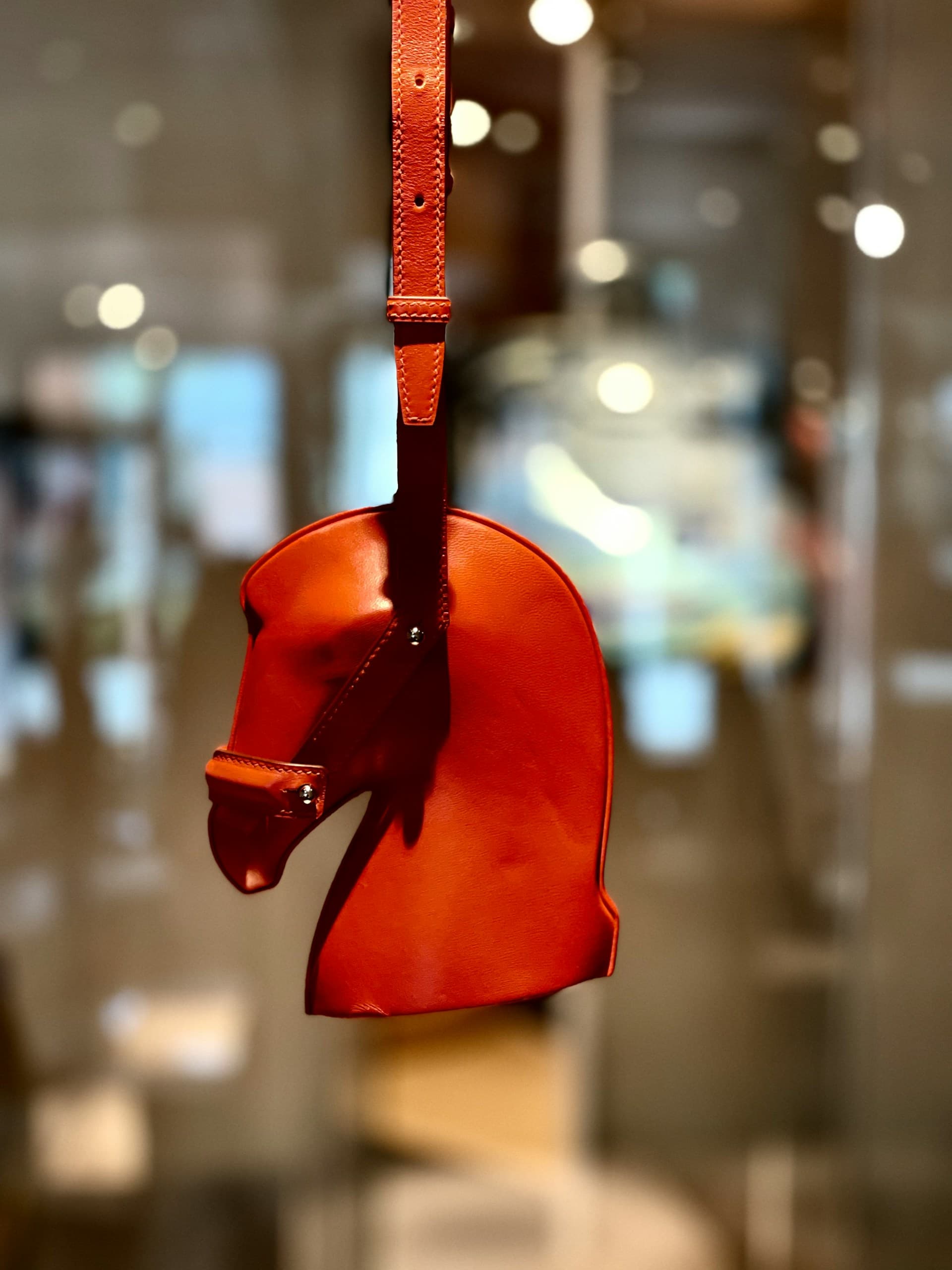
There is something almost absurd about buying soap from Hermès.
Soap is among the most ordinary objects in the world. We use it without much thought, leave it beside a sink, and eventually watch it disappear. It has no resale value, no permanence, and little of the public visibility that traditionally makes luxury attractive. Nobody across a restaurant table can admire the label on a bar of soap that has already been used.
And yet a visit to the Hermès boutique in Copenhagen, followed by the purchase of its soaps, offers an unusually clear way to understand the house. Perhaps a clearer way, in some respects, than looking at the bags that dominate its reputation.
A Birkin is surrounded by mythology before anyone touches the leather. Soap has no such protection. It must make a case for itself in the palm of a hand.
That is where this story begins: not with a waiting list, a celebrity photograph or an auction record, but with the strange proposition that an everyday ritual might become more enjoyable because of the object chosen for it.
A House Built for Movement
Hermès began in Paris in 1837, when Thierry Hermès established a workshop making harnesses. Its original customers belonged to a world in which horses were essential to transport, and good equipment was not merely decorative. Leather needed to withstand strain. Fastenings had to work. Details mattered because a poorly made object could fail at the moment it was needed.
The business grew around an idea that remains central to the brand's identity: an object should be useful, carefully considered and made to last.
In 1880, Thierry's son Charles-Émile moved the business to 24 Faubourg Saint-Honoré, the Paris address that would become inseparable from the house. As travel and society changed, Hermès changed with them. Saddlery led to luggage and leather goods; other crafts followed. The first Hermès silk scarf appeared in 1937. The house introduced Eau d'Hermès in 1951.
The progression is worth noticing. Hermès did not begin with the abstract ambition of becoming a lifestyle brand. It began by making specific things for specific purposes. Its wider world emerged over generations, as the needs and pleasures of its customers evolved.
Of course, the distinction should not be romanticised. The Hermès of today is a global luxury business, and its identity is as carefully managed as its products are carefully designed. But the equestrian origins give the company something many newer brands struggle to invent: a visual and material language that existed before the marketing department.
A strap, a buckle, a saddle stitch, a scarf pattern or a leather edge can carry that history without spelling it out.
Copenhagen, Rather Than Paris
There is a particular pleasure in encountering a great Parisian house somewhere other than Paris.
Hermès has a boutique at Højbro Plads in central Copenhagen. The address belongs to a city whose design culture has its own vocabulary: functional, restrained, sometimes deliberately unshowy. It is an interesting setting for a French house that can be playful, richly coloured and unapologetically expensive.
A boutique visit is never simply about the stock on display. Luxury retail is a kind of theatre, even when the performance is quiet. The pace, the arrangement of objects, the attention given to packaging and the space allowed around individual products all suggest that what is being offered deserves more consideration than an ordinary purchase.
This can be delightful. It can also be calculated. The two possibilities are not mutually exclusive.
For someone who enters without the intention of buying a five-figure handbag, a smaller object offers a different relationship with the brand. A soap, a fragrance or another modest accessory allows a customer to participate in the world of Hermès without pretending that every visit must culminate in a major acquisition.
It is still an indulgence. That is part of the point.
The Copenhagen purchase of Hermès soaps is interesting precisely because it occupies this middle ground. The objects are not necessities in the economic sense. Neither are they trophies in the usual sense. Their appeal lies somewhere between scent, design, ceremony and the private pleasure of having chosen something unnecessarily beautiful.
The Most Democratic Object in an Undemocratic World
Luxury has always been about distinctions. Some are rooted in genuine differences of material and labour. Others are differences of access, recognition and price.
A bar of soap complicates those distinctions.
It is possible to buy excellent soap for very little money. There is no plausible argument that a bathroom requires an Hermès product in order to function properly. The question, therefore, cannot be whether luxury soap is necessary. It is whether it adds something worth paying for.
Consider what a buyer might actually receive. There is the fragrance itself, which can turn a practical routine into a small sensory experience. There is the shape of the object, the way it feels in the hand, and the pleasure of its presentation before the packaging is discarded. There is also the knowledge of where it came from: the connection, however distant, to a house that has spent nearly two centuries building an aesthetic vocabulary.
These are real forms of enjoyment. They are also difficult to price objectively.
A scent that feels exceptional to one person may be unremarkable to another. An orange box can seem charming or faintly ridiculous, depending on the eye looking at it. And once the soap has been used, its expensive origins do not guarantee a proportionately better result than a well-made alternative.
That is not a failure of the product. It is a reminder that luxury is rarely a simple contest of performance.
The most interesting question is not whether an Hermès soap is many times better than an ordinary one. It almost certainly cannot be measured in that way. The question is whether the experience it creates is sufficiently different, and sufficiently valued by the person using it, to justify the premium.
There is no universal answer.
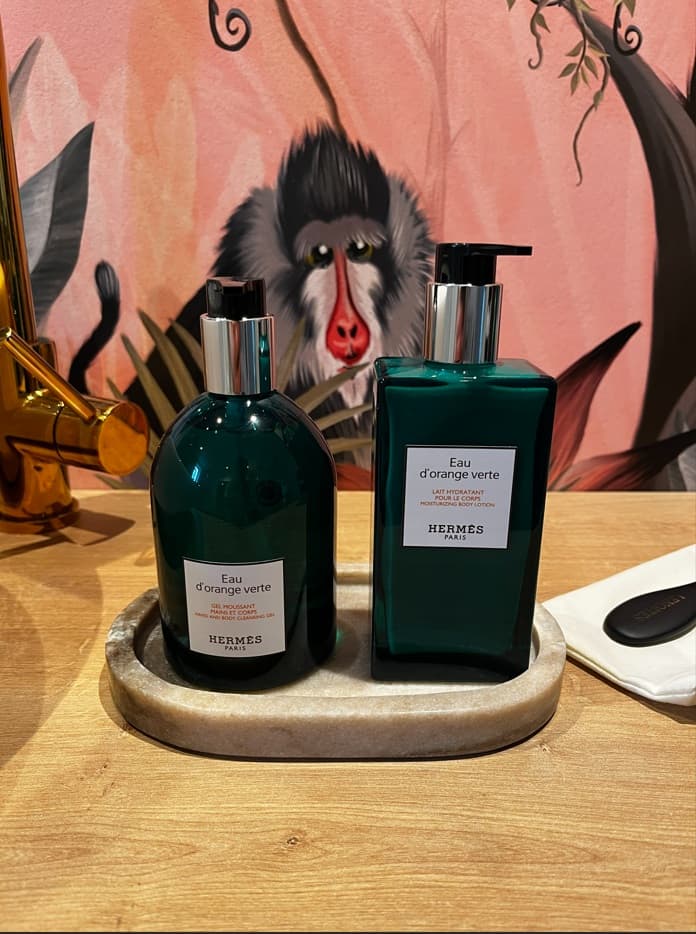
What the Orange Box Really Contains
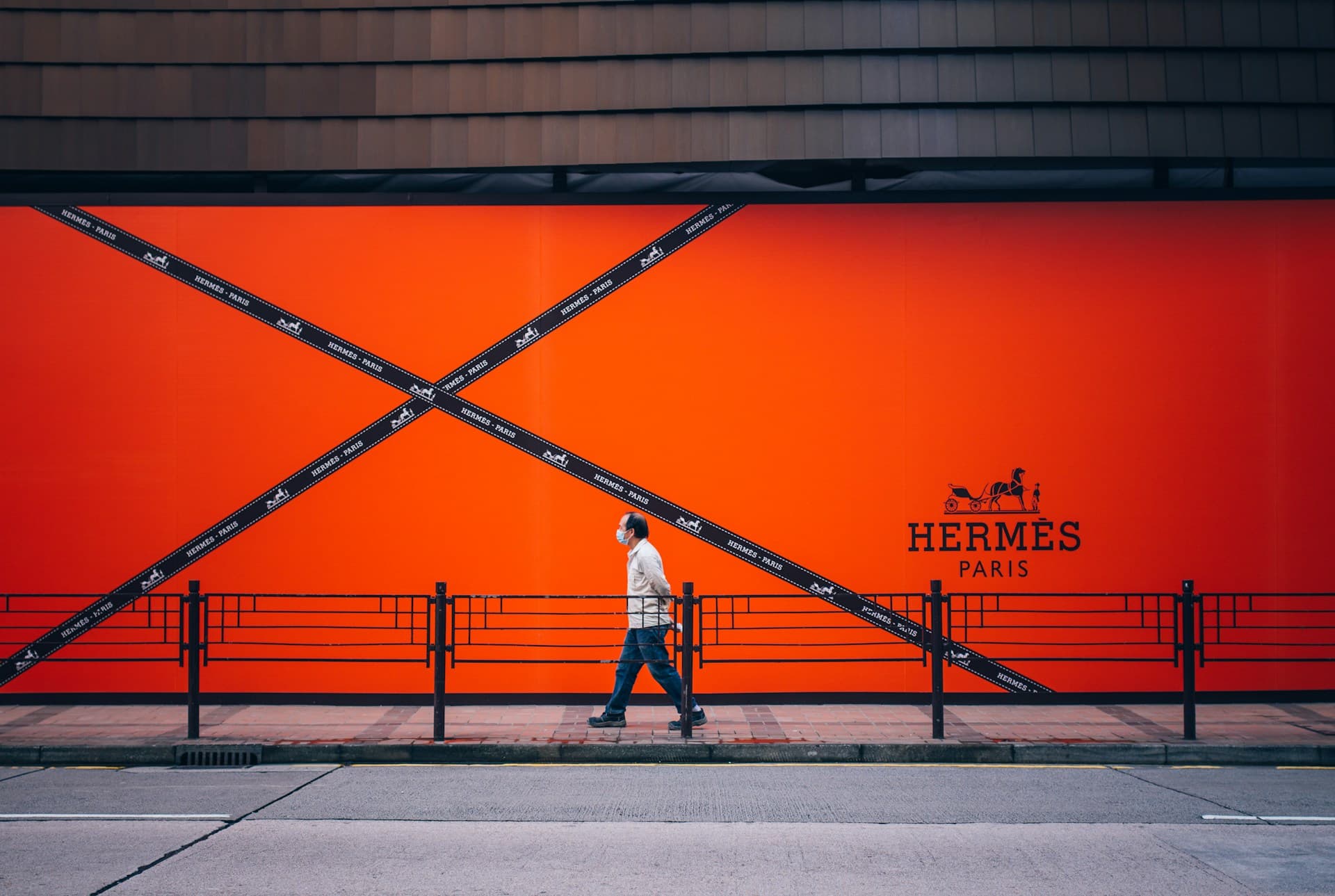
Hermès has achieved something remarkable with colour. Its orange packaging is recognisable even before the name is read. A box can become a symbol of anticipation: something to open slowly, perhaps even something to keep.
But packaging is a curious form of luxury because its usefulness is often brief. It can intensify the moment of purchase without improving the object that remains afterwards.
This is where the house's power becomes visible. It does not sell only leather, silk, fragrance or soap. It sells continuity. The suggestion is that these very different objects belong to the same coherent world, one governed by particular standards of taste, craft and presentation.
That coherence has commercial value. A customer who admires the scarves may become curious about the fragrances. Someone who appreciates the leather goods may find pleasure in a small household object. The price of entry changes; the visual language remains familiar.
There is something generous about that idea, and something strategic. Smaller products make the brand accessible to people who would never consider its most expensive creations. At the same time, they broaden the number of occasions on which Hermès can enter a person's life.
Neither observation cancels the other.
Craftsmanship, and the Limits of the Story
The word craftsmanship follows Hermès everywhere. Often, it is deserved. The house's history in saddlery and leatherwork is substantial, and many of its best-known objects depend on specialised skills that cannot be reduced to a logo.
But craftsmanship should not be treated as a transferable guarantee. The existence of exceptional leatherwork does not automatically prove that every product in every category is exceptional by the same standard.
A silk scarf should be judged as a silk scarf. A leather bag should be judged by its materials, construction, design and use. A bar of soap should be judged by its formulation, fragrance, feel and the pleasure it gives over time.
This distinction matters for an independent publication. A brand's heritage can explain why an object is interesting; it cannot substitute for evaluating the object itself.
Hermès has earned the right to tell a compelling story about making things. It has not earned exemption from ordinary questions about value.
The soap purchase illustrates the difference neatly. The house's history enriches the experience, but the soap still has to be pleasant to use. Its price may reflect fragrance development, production, presentation, distribution and the prestige of the name. Without a controlled comparison, it would be impossible to assign a precise share to each.
Anyone claiming that the premium is entirely justified by ingredients is simplifying the matter. Anyone claiming it is entirely a payment for a logo is simplifying it too.
Luxury is usually more complicated than either argument allows.
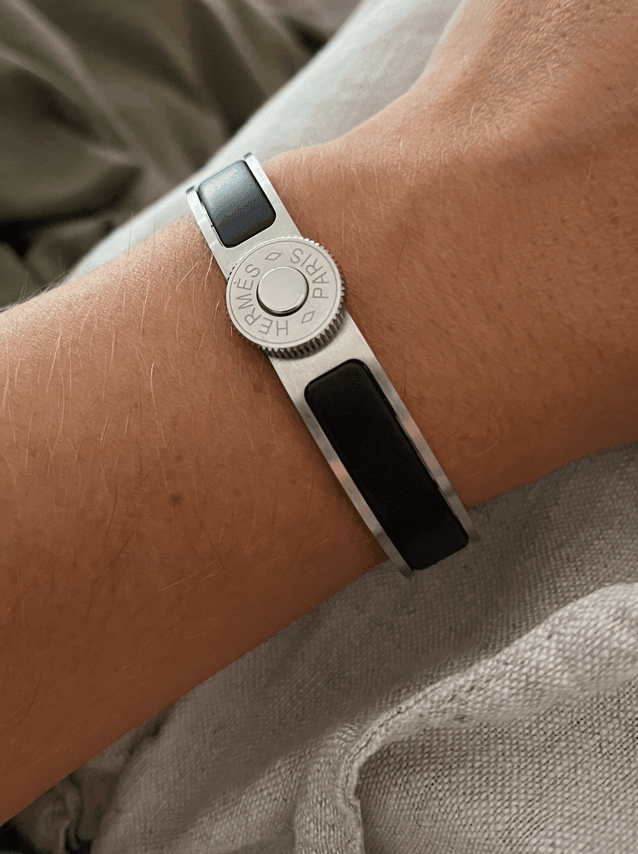
The Appeal of Small Extravagances
There is a familiar pattern in the pursuit of expensive things. Desire grows during the search. Photographs are studied, alternatives compared, purchases postponed and imagined. The object begins to represent not just what it is, but a future feeling: satisfaction, arrival, perhaps even a slightly improved version of oneself.
Then it is bought.
Sometimes the feeling lasts. Sometimes it fades almost immediately, replaced by an interest in the next object.
A small luxury can interrupt that cycle, at least for a while. Its scale makes the decision less momentous. It asks for enjoyment rather than admiration. It may never become an heirloom, but it can make an ordinary morning feel a little less ordinary.
There is an irony here. Hermès is celebrated for objects designed to endure, yet a soap is designed to disappear. Its value is consumed through use. It cannot be preserved indefinitely without defeating its purpose.
That impermanence can be liberating.
We often talk about luxury as though permanence were the ultimate virtue: the watch passed down, the leather bag repaired, the coat worn for decades. Those are admirable ambitions. But not every worthwhile pleasure needs to survive us. A good meal disappears. So does a beautiful fragrance in the air. Their transience does not make them meaningless.
The question is whether we are paying for the pleasure itself or merely for the reassurance of having purchased something prestigious.
The distinction is personal, and not always comfortable.
An Independent View of Hermès
It would be easy to write about Hermès as an untouchable ideal: the old Parisian house, the skilled artisans, the celebrated bags, the orange boxes. That account would contain truths, but it would leave out the central contradiction of modern luxury.
A company can be deeply committed to craft and extraordinarily effective at manufacturing desire. It can preserve traditions while benefiting from the contemporary appetite for status. It can produce genuinely beautiful objects while charging prices that have as much to do with cultural position as with practical utility.
Hermès is not diminished by acknowledging these tensions. In fact, they make the house more interesting.
What distinguishes it from many luxury businesses is not simply expense or exclusivity. It is the consistency of its imagination. Across leather, silk, fragrance and objects for the home, the house has maintained a recognisable point of view. There is wit in its designs, respect for materials in its heritage and a willingness to treat even modest objects as worthy of attention.
That does not mean every product is worth its price. It means the brand has built a world persuasive enough that the question is worth asking.
A visit to the Copenhagen boutique, and the decision to leave with soap rather than something more conspicuous, captures that world in miniature. The purchase is both ordinary and extravagant. It is a practical object wrapped in a story. It offers pleasure, but it also invites scepticism about how much of that pleasure comes from the product and how much from the name.
Both are part of the experience.
What Remains
Eventually, the packaging is put away. The boutique is no longer part of the day. The soap sits by a sink and becomes what it always was: something to be used.
That is the most revealing moment.
If the pleasure survives the disappearance of the shopping experience, then something of value remains. Perhaps it is the scent. Perhaps it is the design, or the small satisfaction of choosing a beautiful object for a mundane task. Perhaps it is simply the permission to enjoy an extravagance without pretending it was necessary.
And if the pleasure does not survive, that is useful knowledge too.
The world according to Hermès is one in which everyday objects can carry history, imagination and ceremony. The world outside the boutique is less obliging. There, an object must find its place in an actual life.
The best luxury does not need to win an argument about its own importance. It earns its place quietly, through the pleasure of being used.
Even when, eventually, there is nothing left of it at all.